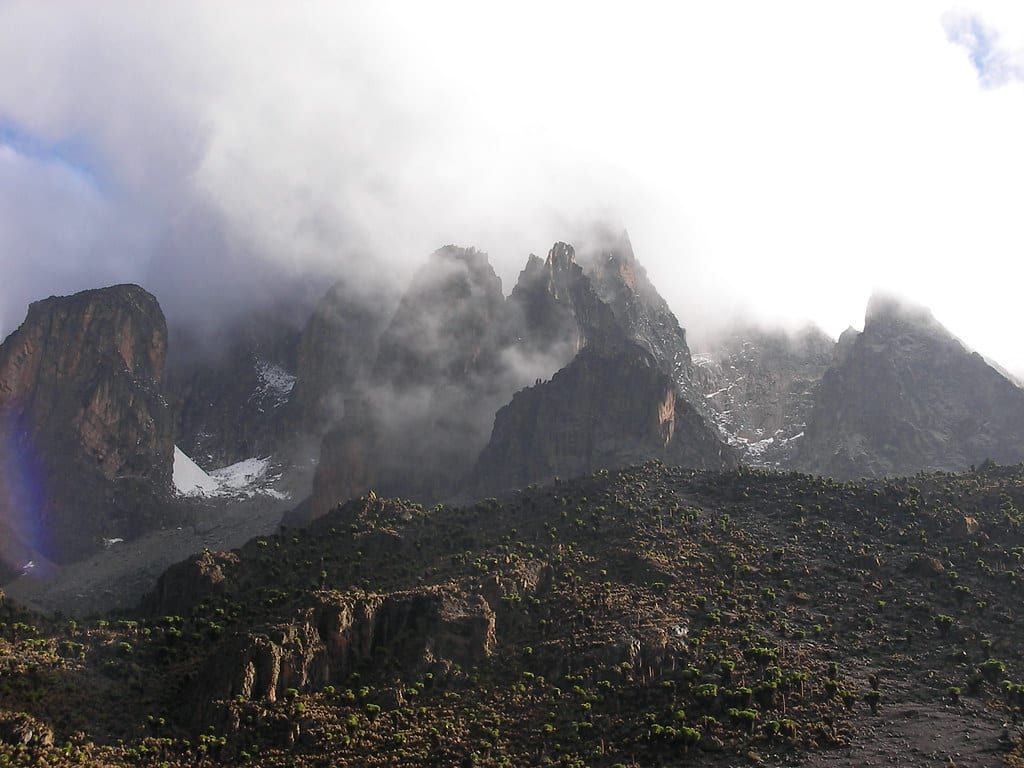
Where you sleep on Mount Kenya depends on why you're there. Trekkers aiming for Point Lenana bunk down in stone huts above 3,000m; wildlife-watchers park themselves at a lodge with a floodlit waterhole and never leave the forest zone. Between those two extremes sit self-catering bandas, a pair of remote log cabins, and a scattering of public campsites, each with its own price and comfort level.
The park has three main entry points - Naro Moru, Sirimon, and Chogoria gates - and nearly every place to stay clusters around one of them. Pick your gate first, since it usually follows from your route or your reason for visiting, and the accommodation choice narrows fast. This guide walks through each category, what a night actually costs, and which one fits your trip.
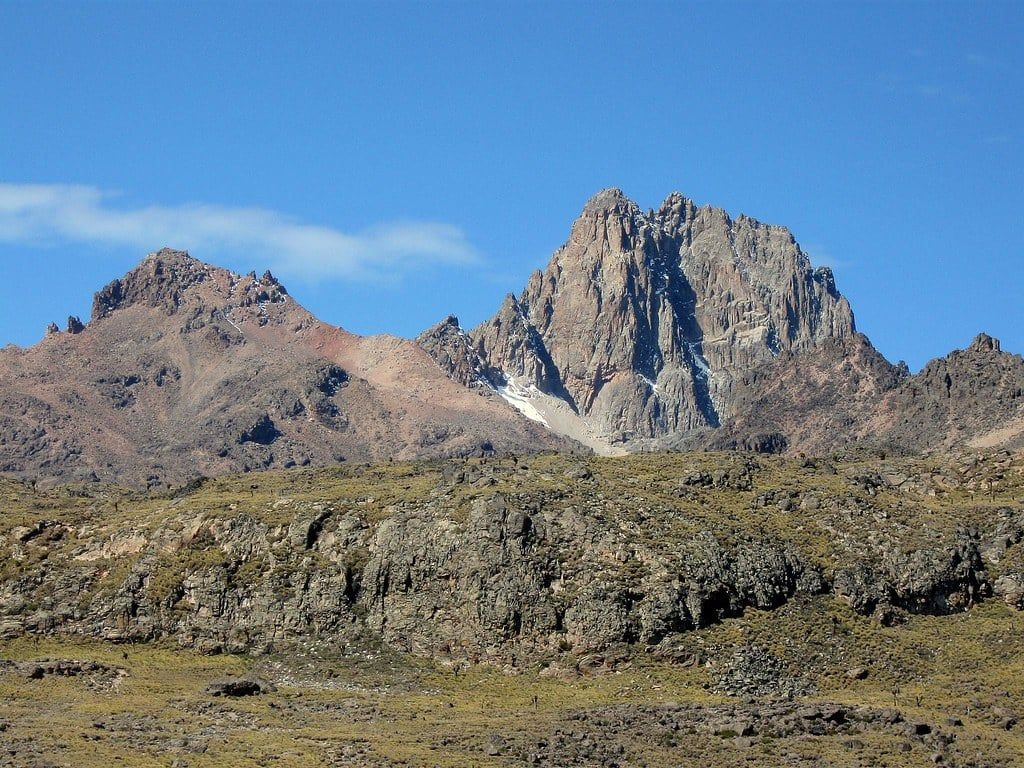
Types of Accommodation in and Around Mount Kenya National Park
Four categories cover almost everywhere you can sleep in or near the park. Forest-edge lodges sit just outside the gates and run on electricity, hot showers, and full board. KWS self-catering bandas and the remote Rutundu log cabins give you a roof and a kitchen but nothing else - you bring your own food and bedding. Mountain huts along the trekking routes are bare stone or timber shelters used purely as overnight stops on the way up. Campsites, the cheapest option, exist at the gates and at several points along the routes.
Match the category to the trip, not the other way round. A weekend safari without a summit attempt calls for a lodge - Serena Mountain Lodge's waterhole viewing works even if you never lace up a boot. A five-day trek to Point Lenana means huts or camps stacked route by route, since taxis and public transport can't reach them. Independent travelers on a budget lean on bandas or a tent instead of a bed.
Naro Moru, Sirimon, and Chogoria gates each pull in a different crowd. Naro Moru, closest to Nanyuki town, has the densest cluster of lodges and is the classic base for a first climb. Sirimon has fewer lodges but the gentlest trailhead. Chogoria, on the wetter eastern side, has the fewest beds and the best scenery. For what else there is to do beyond the summit push, see our guide to day trips from Mount Kenya National Park.
Lodges Near the Park Gates
Lodges suit travelers who want the mountain without giving up a bed, a hot shower, or dinner service. All three well-known properties sit on the Naro Moru side of the park and can be booked directly or through a tour operator; none require a trekking permit to enjoy.
Serena Mountain Lodge
Built as a treehouse-style lodge roughly 30km from Nanyuki, Serena Mountain Lodge overlooks a floodlit waterhole in the Mount Kenya forest. Guests watch elephant, buffalo, and forest antelope drink after dark from balconies and a ground-level bunker, no vehicle required. It's the pick for honeymooners and wildlife-focused visitors who want to see the species covered in our zone-by-zone wildlife guide without trekking a step.
Naro Moru River Lodge
Naro Moru River Lodge sits by the Naro Moru gate and mixes standard rooms with self-catering cottages, plus its own campsite for those who'd rather pitch a tent than pay for a room. It doubles as a trekking base, arranging guides, porters, and transport for the Naro Moru route, so it works equally well as a one-night stop before a climb or a few relaxed days by the river.
Mountain Rock Lodge
Mountain Rock Lodge, also near Naro Moru gate, pairs lodge rooms and cottages with a campsite and runs guided treks on all three main routes - Naro Moru, Sirimon, and Chogoria. Groups who want one outfit to handle lodging before and after the mountain, plus the trek itself, tend to end up here rather than booking each piece separately.
None of these three need a summit itinerary to justify a stay. Families, non-trekkers, and anyone easing into altitude before attempting Old Moses Camp or Met Station will find gentle forest walks and vehicle-based game drives on offer at each.
KWS Self-Catering Bandas & Log Cabins
KWS runs self-catering bandas at the Sirimon and Meru (Chogoria) gates as the budget alternative to a lodge room. You get basic bedding and a kitchen; you bring your own food, cooking gas, and often your own firewood. There's no restaurant, no housekeeping beyond the basics, and no waterhole view - just a roof, walls, and a bed frame for a fraction of lodge rates.
The standout option in this category is Rutundu, a pair of remote log cabins above Lake Rutundu on the mountain's northern flank. Anglers book Rutundu specifically for trout fishing in the lake, and the setting - moorland, silence, a lake instead of a waterhole - is close to nothing else on the mountain. It's a longer drive to reach than the gate bandas, which keeps it quieter.
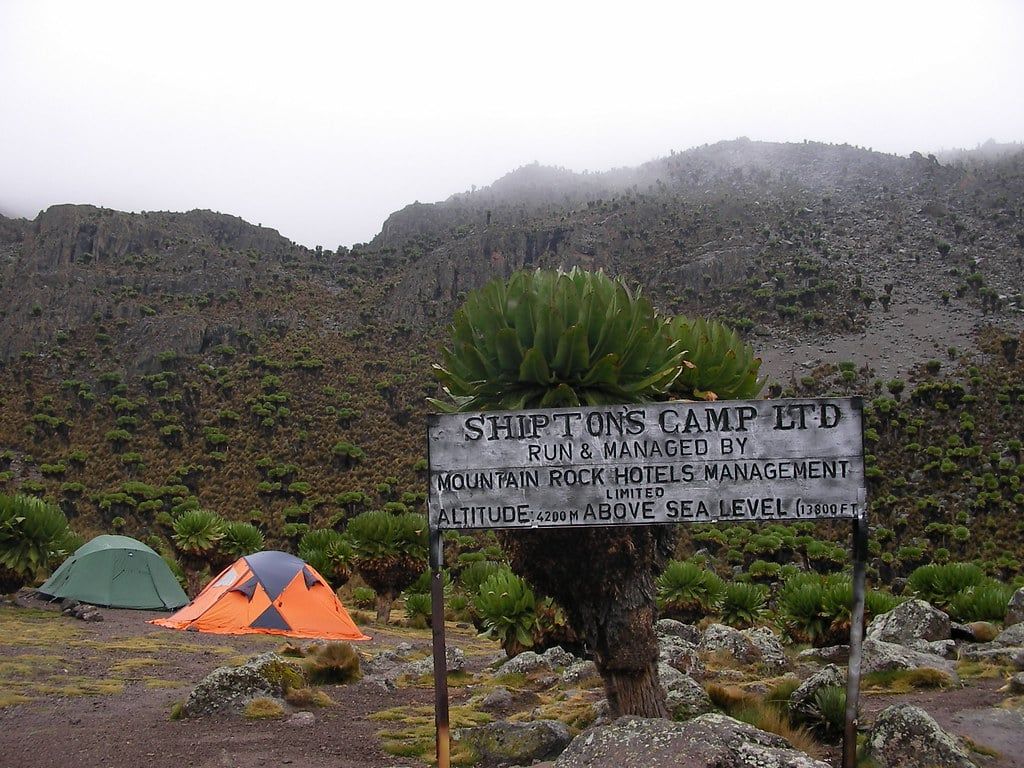
Bandas sit between lodges and huts on comfort. You won't get a hot shower on demand like at Serena, but you won't be sharing a bunkroom with strangers at 4,200m either, like at Shipton's Camp. They suit independent travelers who want privacy and a kitchen without lodge prices, and families who'd rather self-cater than eat on a fixed restaurant schedule.
Mountain Huts & Camps by Trekking Route
Every multi-day trek sleeps in a fixed sequence of huts tied to the route, and the route you pick decides where you'll spend each night. All three main approaches use a lower hut around 3,000m for acclimatization and a higher camp near 4,200-4,300m for the summit push. None of the huts include bedding or meals; you carry a sleeping bag and food, or a guiding outfit supplies both as part of a package. For route planning beyond just where to sleep, our complete route and planning guide covers timing and permits in more depth.
Naro Moru Route
The Naro Moru route is the shortest of the three at about 25km, and the steepest, with a notorious waterlogged stretch called the Vertical Bog just above the forest line. Trekkers overnight at Met Station (around 3,000m) on the first night, then push up to Mackinder's Camp (around 4,200m) for the summit attempt. It's the fastest way up and the fastest way down, which suits tight itineraries, though a wet Vertical Bog can turn a short day into a slog.
Sirimon Route
Sirimon is the gentlest ascent of the three, gaining altitude more gradually over roughly 29km. Old Moses Camp (about 3,300m) is the first night's stop, followed by Shipton's Camp (about 4,200m) below the final summit push. Most guided itineraries pair Sirimon on the way up with Naro Moru on the way down, giving trekkers two landscapes without adding an extra day.
Chogoria Route
Chogoria, on the wetter eastern slopes, runs about 40km including the approach and is generally rated the most scenic of the three, passing Nithi Falls and Lake Michaelson along the way. Overnight stops are the Meru Mount Kenya Bandas near the gate (about 2,900m) and Minto's Hut higher up (about 4,300m). It has the thinnest accommodation infrastructure of the three routes, so book huts and transport ahead rather than assuming space will be available.
| Route | Overnight Stops | Approx. Altitude | Trail Length |
|---|---|---|---|
| Naro Moru | Met Station, Mackinder's Camp | 3,000m / 4,200m | ~25 km, steepest, Vertical Bog |
| Sirimon | Old Moses Camp, Shipton's Camp | 3,300m / 4,200m | ~29 km, gentlest ascent |
| Chogoria | Meru Mount Kenya Bandas, Minto's Hut | 2,900m / 4,300m | ~40 km, most scenic |
Point Lenana, at 4,985m, is the trekking summit almost everyone is aiming for from these huts. Batian (5,199m) and Nelion (5,188m) are the true highest points, but both demand technical rock climbing and a different level of gear and guiding - not something any of these standard hut-to-hut itineraries reach. If you're weighing whether the trekking summit is enough of a challenge, our Mount Kenya vs Kilimanjaro comparison is a useful gut check on scale before you commit to a route.
Camping in the Park
Camping is allowed at designated public campsites near each gate and at several points along the trekking routes, and it's the cheapest way to sleep on the mountain. Fees are charged separately from park entry and from any hut fee, so a camping trip still needs a park ticket bought in advance through KWSPay.
Gear matters more here than anywhere else on this list. Nighttime temperatures at the higher camps, above roughly 4,000m, drop well below freezing, so a three-season tent and a summer sleeping bag won't cut it. Pack a four-season tent (or use one supplied by a trekking outfit) and a bag rated for at least -10C. Below the moorland, at gate-level campsites, conditions are far milder and a standard tent is fine.
Independent campers handle their own gear, food, and navigation between sites, while guided trekking packages usually supply the tent, cook, and porters as part of the price. If you're weighing whether to go independent or join a guided outfit, our trekking tours page breaks down what's typically included.
Costs, Fees & How to Book
A night on Mount Kenya is never just one charge. Park entry, camping or hut use, and the mountain climbing permit for summit attempts are billed separately, and all of it now runs through the KWSPay platform on eCitizen - cash isn't accepted at any gate.
| Visitor Category | Adult (24 hrs) | Child 3-17 |
|---|---|---|
| East Africa Citizen | KES 800 | KES 400 |
| Kenya Resident | KES 1,100 | KES 550 |
| Non-resident (international) | USD 70 | USD 35 |
On top of entry, camping runs roughly KES 200-350 per person per night for citizens and residents, or USD 10-35 for foreign visitors, depending on the campsite. Anyone attempting Point Lenana, Nelion, or Batian also needs a separate mountain climbing permit - KES 1,500 for citizens and residents, USD 30 for everyone else. A private car up to six seats costs KES 600 to bring in for 24 hours. Check current rates on the park's opening hours and fees page before you travel, since a 2025 fee increase for non-resident visitors is under legal review and rates could shift.
Booking channels differ by accommodation type. Bandas and the Rutundu log cabins are booked directly through KWS. Lodges - Serena Mountain Lodge, Naro Moru River Lodge, Mountain Rock Lodge - take reservations on their own websites or through a tour operator, same as any hotel. Most mountain huts are effectively booked as part of a guided trek, since the guide arranges hut fees, porters, and permits together. For a full breakdown of what a guided package covers versus paying piece by piece, see our cost of climbing Mount Kenya guide.
Which Accommodation Suits Your Trip?
Match your trip type to the list below rather than picking a property first.
- Wildlife or safari visit, no trekking: Serena Mountain Lodge or a gate lodge like Naro Moru River Lodge.
- Budget independent traveler: KWS bandas at Sirimon or Meru gate, or a gate campsite.
- Multi-day summit trekker: route-matched huts - see the comparison table above.
- Luxury or honeymoon trip: Serena Mountain Lodge, for the waterhole and full board.
- Family or group wanting privacy: self-catering bandas or lodge cottages over shared huts.
Combine categories if your trip has two phases - a lodge night before and after the climb, huts in between - which is exactly how most guided climbing tours are built.
Frequently Asked Questions
Can I stay inside Mount Kenya National Park without trekking to the summit?
Yes. Serena Mountain Lodge and gate lodges like Naro Moru River Lodge or Mountain Rock Lodge are built for non-trekkers, with wildlife viewing, forest walks, and day activities that never involve a route or a hut.
What is the cheapest place to stay in Mount Kenya National Park?
Camping at designated campsites and KWS self-catering bandas are the cheapest options, well below lodge rates or a guided hut-based trekking package.
Do the mountain huts provide bedding and food?
No. Old Moses, Mackinder's, Shipton's, and Minto's are basic shelters without bedding or meals. Trekkers bring a sleeping bag and food, or have both supplied by a trekking operator.
Which trekking route has the best accommodation?
Naro Moru and Sirimon have the most developed hut infrastructure and the most lodges nearby. Chogoria is the most scenic route but has fewer overnight options - just the Meru Bandas and Minto's Hut.
Is camping safe in Mount Kenya National Park?
Yes, within designated sites. The main risk isn't safety from wildlife or crime but cold: nighttime temperatures at camps above roughly 4,000m drop below freezing, so proper cold-weather gear is essential.
How far in advance should I book Mount Kenya accommodation?
Book several weeks to a few months ahead if you're traveling during the dry-season trekking peaks, roughly January-February and July-October, when huts, bandas, and lodges fill up fastest.
How do I get to the accommodation at Mount Kenya National Park?
Access is through the three main gates - Naro Moru, Sirimon, and Chogoria - reachable by road from towns like Nanyuki, Naro Moru, and Chogoria town. Most gate-side lodges arrange pickups from these towns.