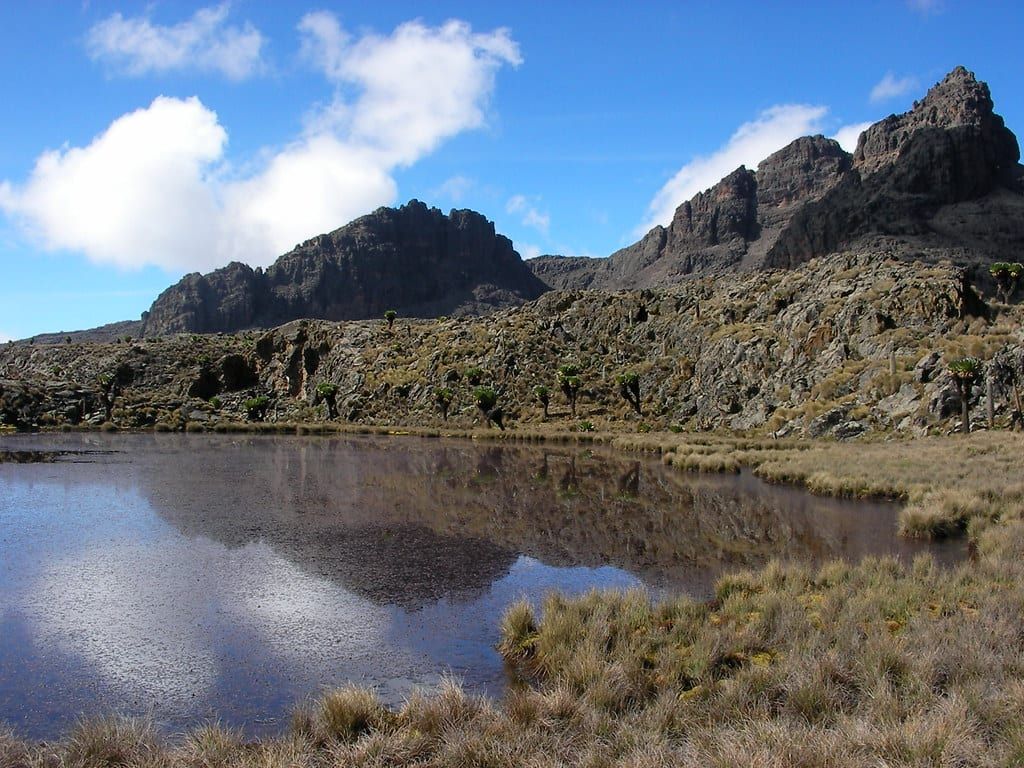
A guided climb up Mount Kenya can cost anywhere from $700 to $5,000 per person, and the gap has almost nothing to do with luck. It comes down to route, group size, season, and exactly what an operator has bundled into the quote. Below is every line item that shows up on a real Mount Kenya invoice, so you can read any operator's price sheet and know what it actually buys.
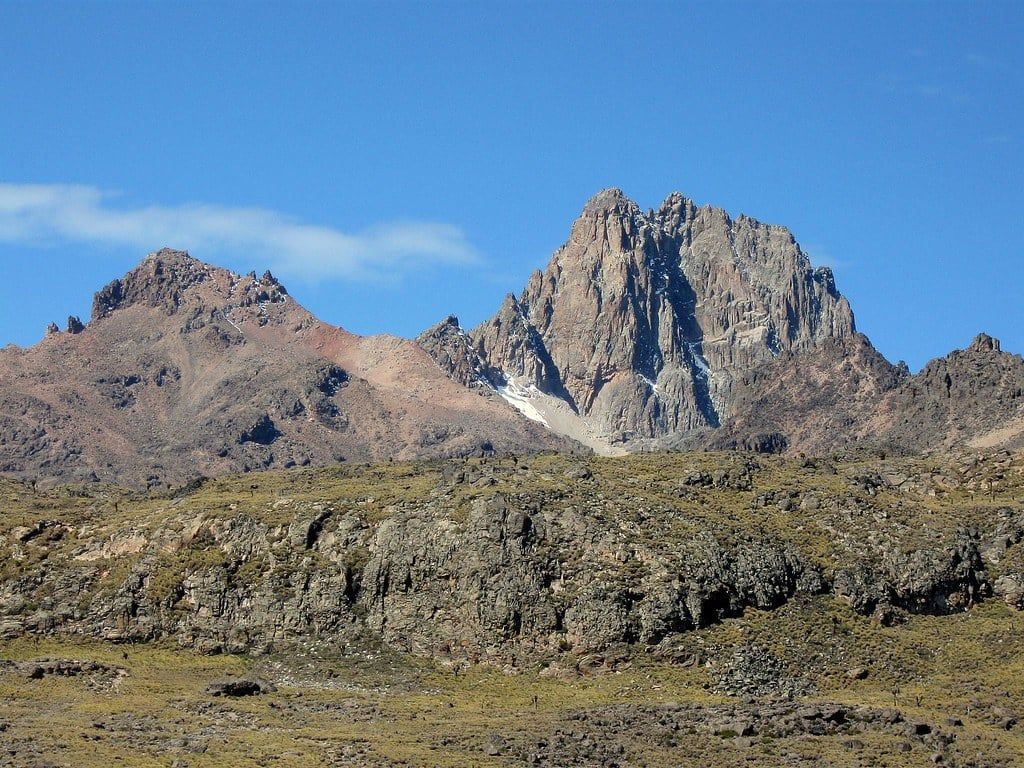
How Much Does It Cost to Climb Mount Kenya? (Quick Answer)
Budget guided treks start around $700 per person for a 5-day climb on a shared departure, camping the whole way with a local operator. That figure covers park fees, a guide, porters, food and basic camping gear, and little else. Mid-range packages, the most commonly booked option, run $800 to $1,500 and usually mix camping with a night or two in a mountain hut, plus a vehicle transfer from Nairobi or Nanyuki. Premium and technical packages push past $2,500 and can reach $5,000 or more, covering private guiding, better food, and - for Batian or Nelion - specialist rock-climbing support.
Online quotes for the same mountain swing from $400 to $6,000 because they aren't pricing the same trip. A $400 figure usually strips out park fees and transport and prices only the guide's day rate; a $6,000 figure usually bundles in international flights, brand-new gear, and a private technical ascent. Neither is dishonest, exactly, but it makes headline numbers useless for comparison unless you check what each one includes. Our complete route, cost and planning guide breaks down a standard itinerary day by day if you want the full picture before you request quotes.
The Real Cost Breakdown: Park Fees, Guides, Porters & Getting There
As of October 1, 2025, Kenya Wildlife Service charges non-resident adults $70 a day to enter Mount Kenya National Park ($35 for children); East African citizens pay KES 800 a day and Kenya residents KES 1,100. Other African passport holders pay $30 a day. Over a 5-day trek, that's $350 in park fees alone for a non-resident adult, before a dollar goes to guides, porters or food. Every fee is now paid digitally in advance through KWSPay on eCitizen - gates no longer take cash. Check the current schedule on our park hours and entry fees page before you book.
Camping costs $20 a night for non-residents at public campsites, rising to $35 at special sites nearer the summit; East African citizens pay KES 200. Mountain huts like Mackinder's Camp cost more per night than camping and fill up fast in high season, so book one through your operator if your itinerary calls for it rather than assuming a bed will be free.
Hiking alone is illegal on Mount Kenya, so guide and porter fees aren't a line you can skip. A chief guide costs $30-50 a day, an assistant guide $25-35, and porters $20-30 a day each. On top of that, budget $100-150 per climber for tips, split among the guide, porters and cook and usually handed over in cash - USD, EUR or KES all work - on the final day.
Renting gear beats buying it for a one-off climb. Across a typical four-day rental, expect roughly $12 for boots, $10 for a sleeping bag, $8 for trekking poles, $10 a day for a backpack, and $8 for gaiters - a full kit runs well under $100.
Getting from Nairobi to a gate (188-210km depending on which one) costs $10-20 on a public matatu, $30-50 per person on a shared shuttle, or $100-200 for a private transfer. Our directions guide covers the road and flight options gate by gate, including the 40-50 minute flight from Wilson Airport to Nanyuki for anyone short on time.
Cost by Route and Trek Length
Eight established routes climb Mount Kenya, but roughly 90% of the mountain's 15,000-odd annual climbers use just three: Sirimon, Naro Moru and Chogoria. That concentration keeps prices on those three competitive. Stray onto Burguret or Timau and you'll pay a premium for the extra permitting they require.
Sirimon-Naro Moru
A 5-6 day climb combining a Sirimon ascent with a Naro Moru descent typically starts around $1,000 per person. It's the most-booked combination because it shows two different faces of the mountain - gentler moorland going up, the infamous Vertical Bog coming down - without adding extra days to the itinerary.
Chogoria
A 5-6 day Chogoria trek runs $800-$1,200 depending on group size. Most trekkers call it the most scenic option, threading past Nithi Falls and Lake Michaelson on its way up. Prices tend to sit slightly below Sirimon-Naro Moru mainly because Chogoria groups run larger, which spreads guide and porter fees across more people.
Burguret and Timau
Burguret, a 6-day route, costs about $1,200 for a solo climber, dropping to roughly $1,100 per person for two and $950 per person for groups of three or more. Both Burguret and Timau carry a $50 per-person surcharge over the standard rate because KWS requires special permission to use them. It's quieter and wilder than the big three - budget for the extra and you'll rarely see another group all week.
| Route | Typical Duration | Cost per Person |
|---|---|---|
| Sirimon-Naro Moru | 5-6 days | from $1,000 |
| Chogoria | 5-6 days | $800-$1,200 |
| Burguret (group of 3+) | 6 days | from $950 |
| Burguret (solo) | 6 days | about $1,200 |
| Timau | 6 days | standard rate + $50pp surcharge |
Technical Climbing Costs: Batian and Nelion
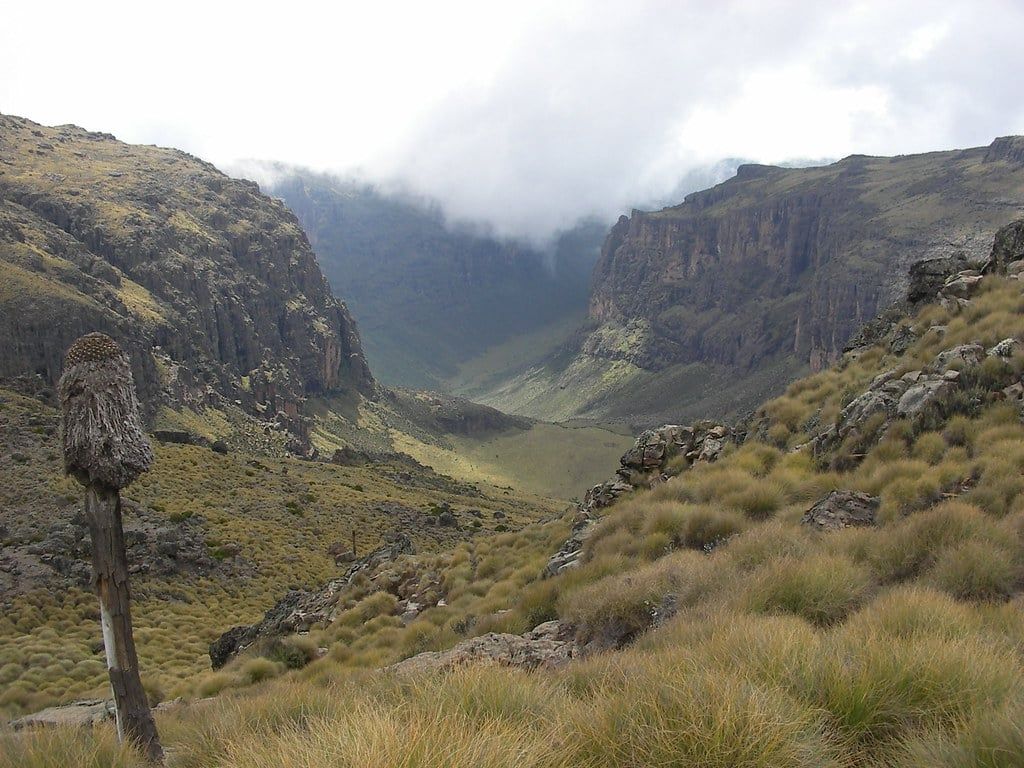
Point Lenana, at 4,985m, needs no rock-climbing skill and is where nearly all Mount Kenya summit photos come from. Batian (5,199m) and Nelion (5,188m), the true summits, demand technical rock climbing and a specialist mountaineering guide - which is why they sit in an entirely separate price bracket, closer to a small Himalayan expedition than a trek.
A technical climbing permit adds $30 a day for non-residents (KES 4,500 a day for residents) on top of the standard park conservation fee. That surcharge alone can add $150-240 to a five-to-eight day summit attempt, before guiding costs are even factored in.
A 6-day technical package to Batian or Nelion runs $1,890 for a solo climber, dropping to about $1,548 per person for a group of three or more. Seven-day packages cost $2,098 solo down to $1,738pp in a group, and 8-day packages run $2,390 down to $1,960pp. Group size matters here as much as on the standard routes - the rope, gear and specialist-guide fees get shared, not the exposure.
What's Included vs Excluded — and the Hidden Costs
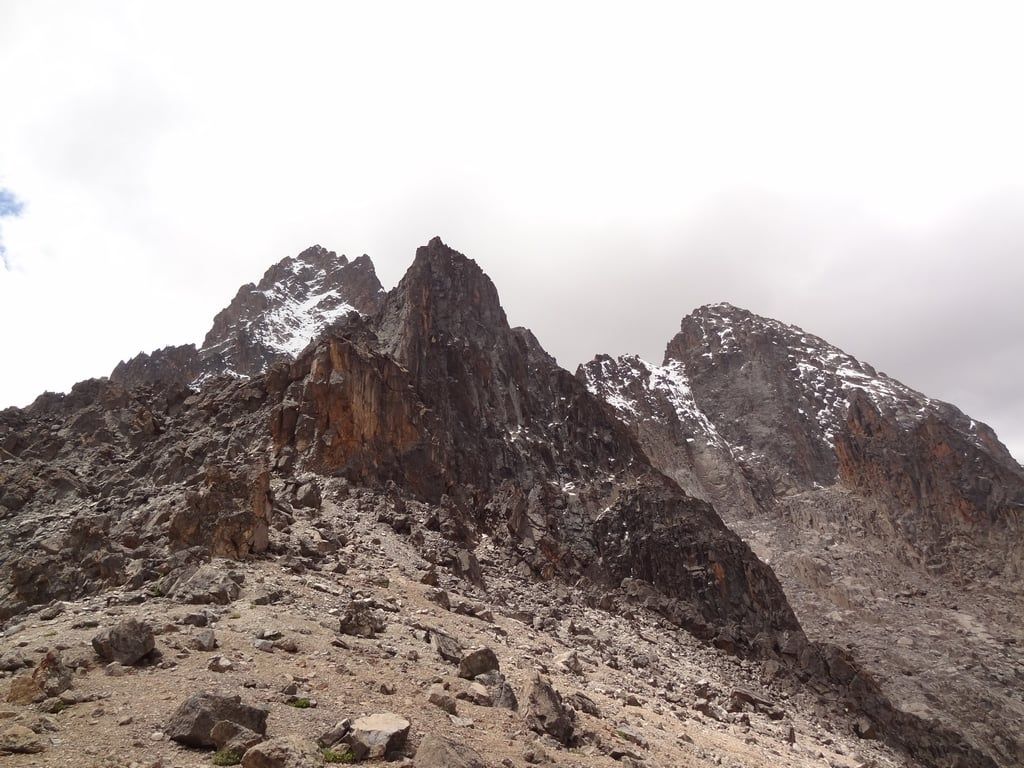
A typical Mount Kenya package covers park entry fees, guide, porter and cook wages, food on the mountain, drinking water, and transport between town and the gate. That's the non-negotiable core of the price, dictated largely by Kenya's guide-mandatory rules rather than by any operator's markup.
What it won't cover: international flights, visa fees, personal climbing or camping gear, travel insurance, tips, and anything you eat or drink outside the standard menu. Oxygen tanks and portable toilets are usually paid add-ons rather than standard inclusions.
If you're travelling from outside East Africa, return flights to Nairobi typically cost $1,000-$2,000, and visa, vaccinations and insurance together add roughly $400-$550. Add those to even a $700 budget trek and the real all-in cost lands closer to $2,100-$3,250 - which is exactly why so many online guides quote wildly different totals for what looks like the same climb.
What Changes Your Price: Group Size, Season, Nationality & Operator
A solo climber can pay $250-350 a day for guide, porter and camp services that a group of four or more splits down to about $120 per person per day. Nobody sets out to join a stranger's group, but doing so is the single biggest lever on the whole trip.
High season - roughly January to March and June/July through October, the two dry windows - carries higher operator rates because demand peaks and trails are at their firmest. Low season, April to June and October to December, is cheaper but wetter; expect mud on the Vertical Bog and the chance of a rerouted day.
Park fees are tiered by residency, not just nationality: East African citizens pay KES 800 a day, Kenya residents KES 1,100, other African passport holders $30, and everyone else $70. That's before any operator markup, so two friends on an identical itinerary, one Kenyan and one American, will still see different invoices.
Private climbs with a dedicated guide, porters and vehicle start around $2,000-$3,500 per person - book one for flexibility on pace and dates, not to save money. For everyone else, joining a scheduled group through a climbing tour operator keeps costs at the standard published rates.
How to Save Money Without Cutting Corners on Safety
None of the tips below involve skipping a guide or rushing acclimatization - that's how people end up airlifted off the mountain. They trim the parts of the bill you actually control.
- Join a scheduled group departure instead of booking a private climb.
- Camp instead of booking mountain huts - $20 a night beats most hut rates.
- Travel in shoulder season (April-June or October-December) for lower operator rates.
- Rent gear you'll only use once instead of buying a full kit.
- Get an itemized quote and compare inclusions line by line, not just the headline price.
Splitting guide fees ($50-80 a day for a chief and assistant guide combined) and porter costs ($20-30 a day each) across a group of four instead of climbing solo can cut your per-day cost by more than half. It's the single most effective move on this list, and it costs nothing to arrange - just say yes to a group booking on our trekking tours page instead of a private one.
Mount Kenya vs Kilimanjaro: Which Costs Less?
Mount Kenya wins on price. Guided climbs here typically run $1,000-$4,000 per person against $2,000-$6,000 for Kilimanjaro, and the gap comes down to time on the mountain: a Mount Kenya trek takes 4-6 days versus 6-8 on Kilimanjaro, which means fewer park-fee days, fewer guide and porter days, and fewer meals to supply. Shorter also means less exposure to bad weather and altitude risk, not just a smaller invoice. Read the full side-by-side on routes, difficulty and scenery in our Mount Kenya vs Kilimanjaro guide if you're still deciding between the two.
| Mount Kenya | Kilimanjaro | |
|---|---|---|
| Typical guided price | $1,000-$4,000 per person | $2,000-$6,000 per person |
| Typical trek length | 4-6 days | 6-8 days |
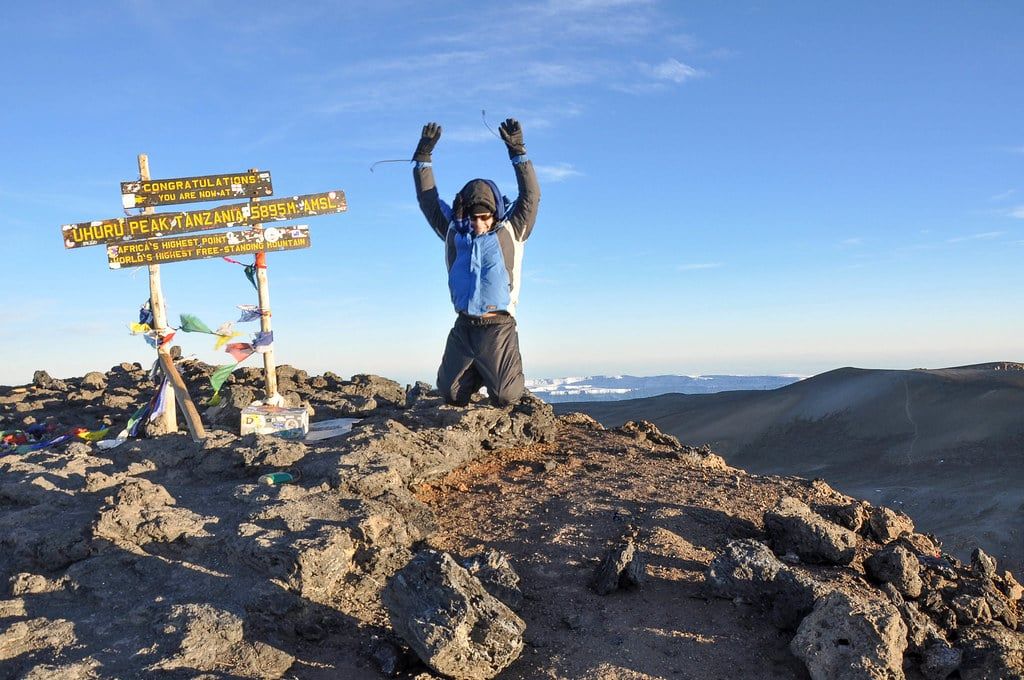
| Highest point reached by trekkers | Point Lenana, 4,985m | Uhuru Peak, 5,895m |
| Guide required | Yes, mandatory | Yes, mandatory |
Frequently asked questions
How much does it cost to climb Mount Kenya per person?
Budget treks start around $700 for a 5-day climb with camping; mid-range packages run $800-$1,500; premium or technical trips can reach $2,500-$5,000 or more. International travelers should add $1,400-$2,500 more for flights, visa and insurance.
What is the cheapest way to climb Mount Kenya?
Pick Sirimon or Naro Moru, camp instead of using huts, join a scheduled group departure to split guide and porter fees, travel in low season (April-June or October-December), and rent gear rather than buy it.
How much is the Mount Kenya park fee?
As of October 1, 2025, the KWS non-resident conservation fee is $70 a day for adults and $35 for children. East African citizens pay KES 800 a day and Kenya residents KES 1,100. A further $30-a-day technical permit applies to Batian and Nelion climbs. Source: mtkenyapark.org.
How much should I tip guides and porters on Mount Kenya?
Budget roughly $100-150 per person for the whole trip, split among the chief guide, assistant guide, porters and cook, typically handed over in USD, EUR or KES on the last day.
Is Mount Kenya cheaper to climb than Kilimanjaro?
Yes. Mount Kenya climbs typically run $1,000-$4,000 per person against $2,000-$6,000 for Kilimanjaro, mainly because Mount Kenya treks are shorter (4-6 days versus 6-8) with lower cumulative park fees and logistics costs.
Can I climb Mount Kenya without hiring a guide?
No. Kenyan regulations require a registered, KWS-card-holding guide for every climber on the mountain, which makes guide and porter fees a mandatory cost rather than an optional extra.
Do Mount Kenya park fees differ for Kenyan citizens and residents?
Yes. East African citizens pay KES 800 a day, Kenya residents KES 1,100, other African citizens $30, and non-residents $70, under the KWS fee schedule effective October 1, 2025.
What's not included in a typical Mount Kenya climbing package price?
Commonly excluded: international flights, visa fees, travel and evacuation insurance (mandatory since October 2024), personal gear not rented, alcohol and snacks, tips, and any hotel stays before or after the climb.