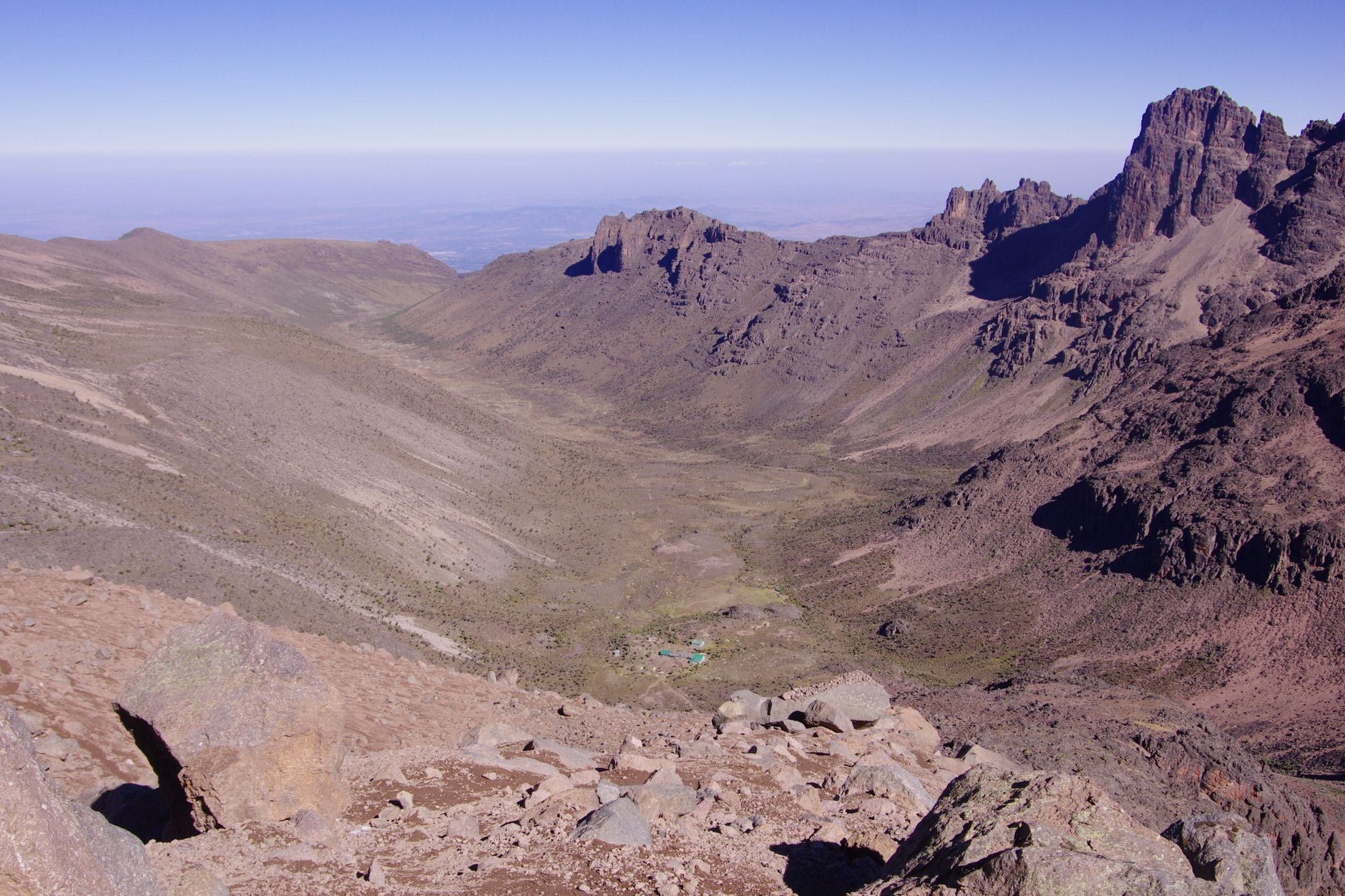
Mount Kenya at a Glance
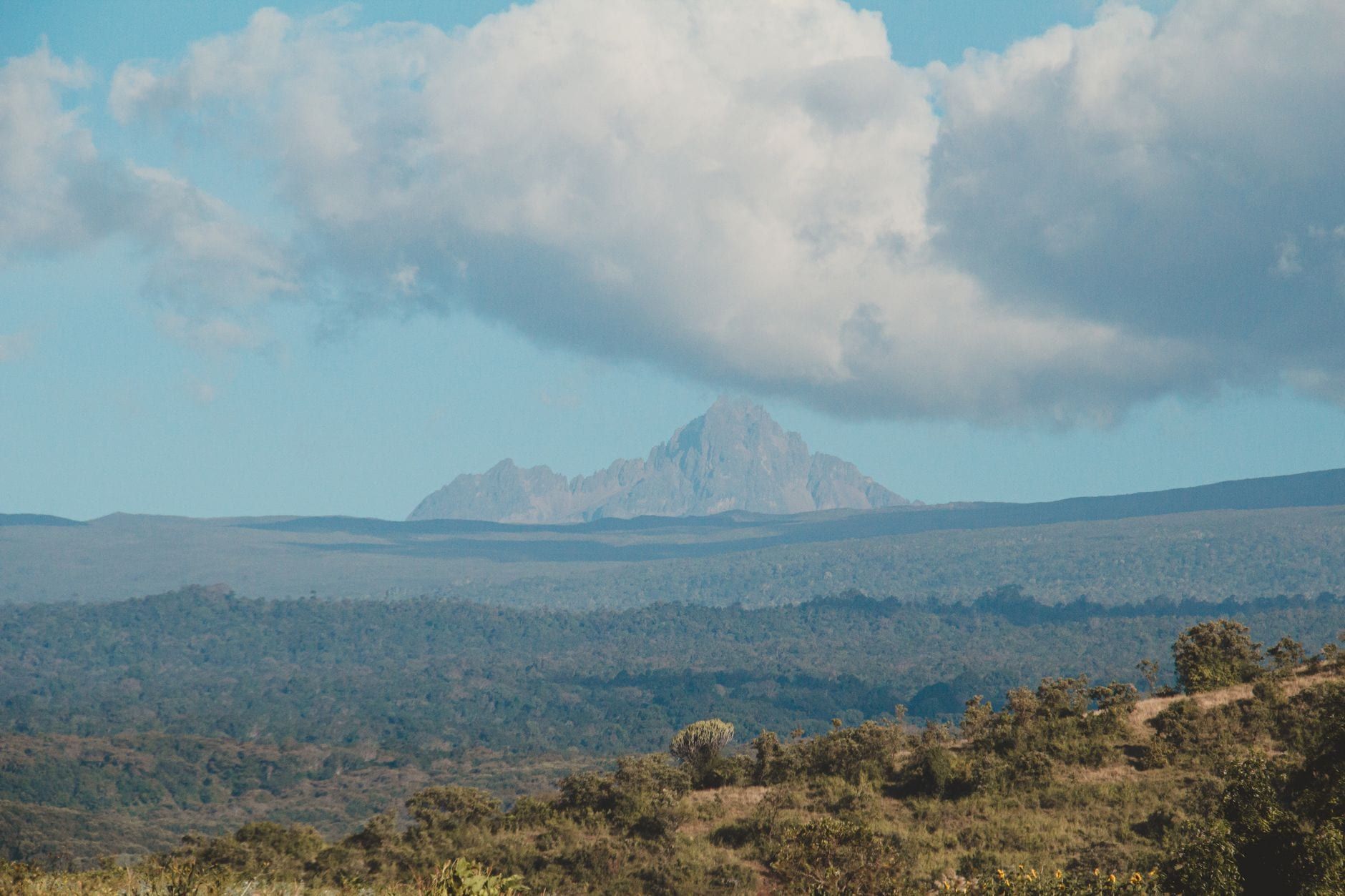
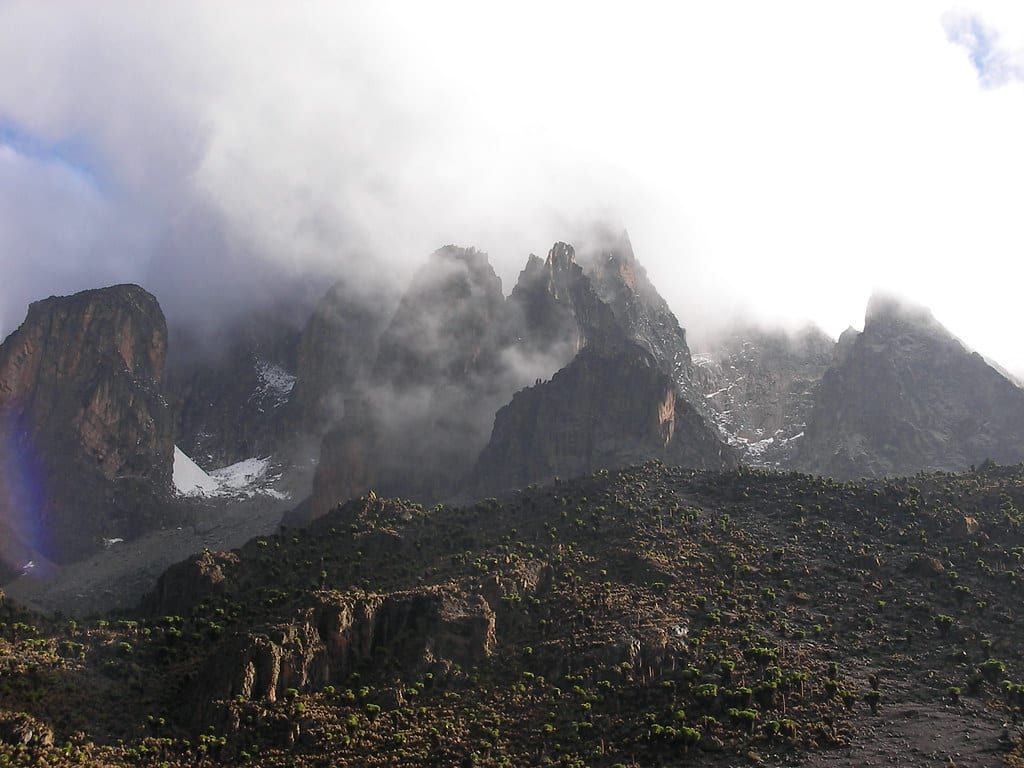
Climbing Mount Kenya usually means one specific goal: Point Lenana, the 4,985m trekking summit, not the technical rock spires of Batian (5,199m) or Nelion (5,188m) that give the mountain its jagged skyline. Africa's second-highest peak sits on the equator about 200km north of Nairobi, roughly four hours by road (see how to get there), and rises inside Mount Kenya National Park, a UNESCO World Heritage Site since 1997. Around 15,000 people attempt the mountain each year. About 60% make it to Point Lenana, while only around 200 reach Nelion and roughly 50 reach Batian.
| Category | Detail |
|---|---|
| Best route | Sirimon up, Chogoria down |
| Typical duration | 4-5 days |
| Best season | Jan-Mar or Jul-Oct |
| Guide required | Yes, KWS-licensed, mandatory |
| Trek cost (package only) | $350-$1,590+ per person |
Mount Kenya draws a fraction of Kilimanjaro's crowds and asks for less time off work. Kilimanjaro tops out higher, at 5,895m, but stays non-technical the entire way up. Point Lenana covers comparable trekking terrain in fewer days, and anyone who wants rock climbing on top of it can extend onto Nelion afterward. For the mountain's history and full visitor picture, see our Mount Kenya overview.
Choosing Your Route: Sirimon, Chogoria, Naro Moru and Beyond
Three routes carry about 90% of Mount Kenya's traffic: Sirimon, Naro Moru and Chogoria. Each has staffed park gates, a distinct personality, and its own trade-off between speed, scenery and comfort.
Sirimon
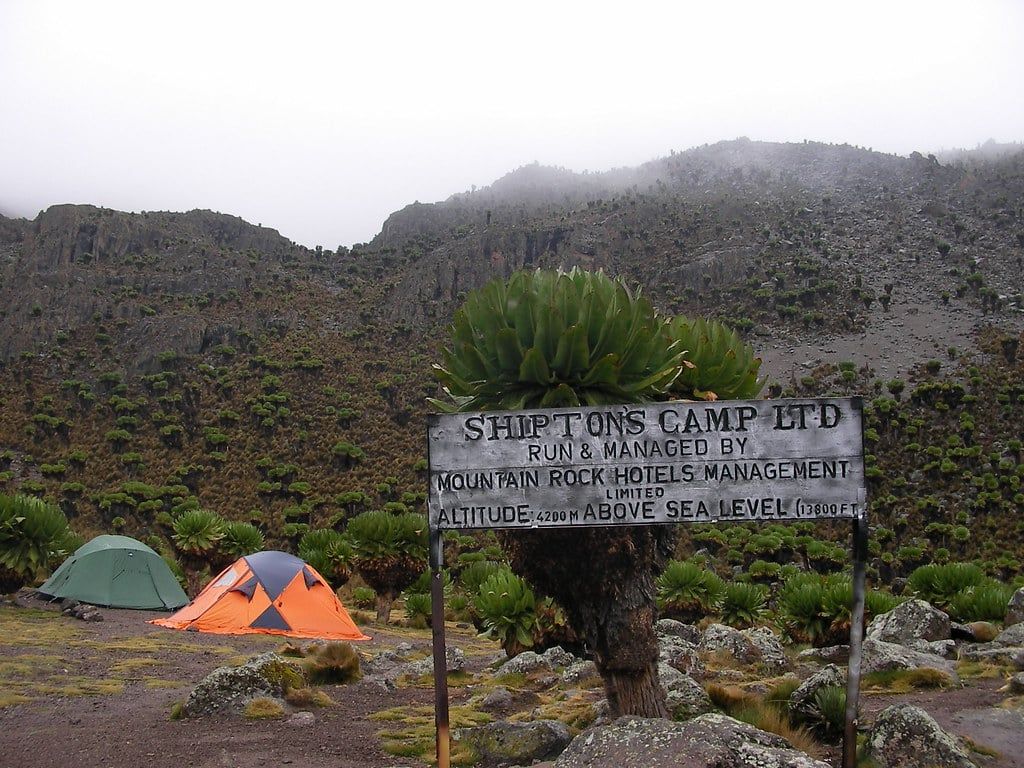
Sirimon is the most gradual approach, starting at 2,650m on the mountain's drier northwest side and running about 29km to Point Lenana. Huts line the whole route — Old Moses, then Shipton's Camp — so there's no need to carry a tent. It's the route most guides recommend for first-timers chasing the best acclimatization profile.
Naro Moru
Naro Moru is the shortest line to the top, about 25km from a 2,400m start, and the fastest way up if time is tight. That speed has a cost: the infamous Vertical Bog, a steep, waterlogged stretch of tussock grass just above the forest line, turns to thigh-deep mud after rain. It's also the least scenic of the three main routes.
Chogoria
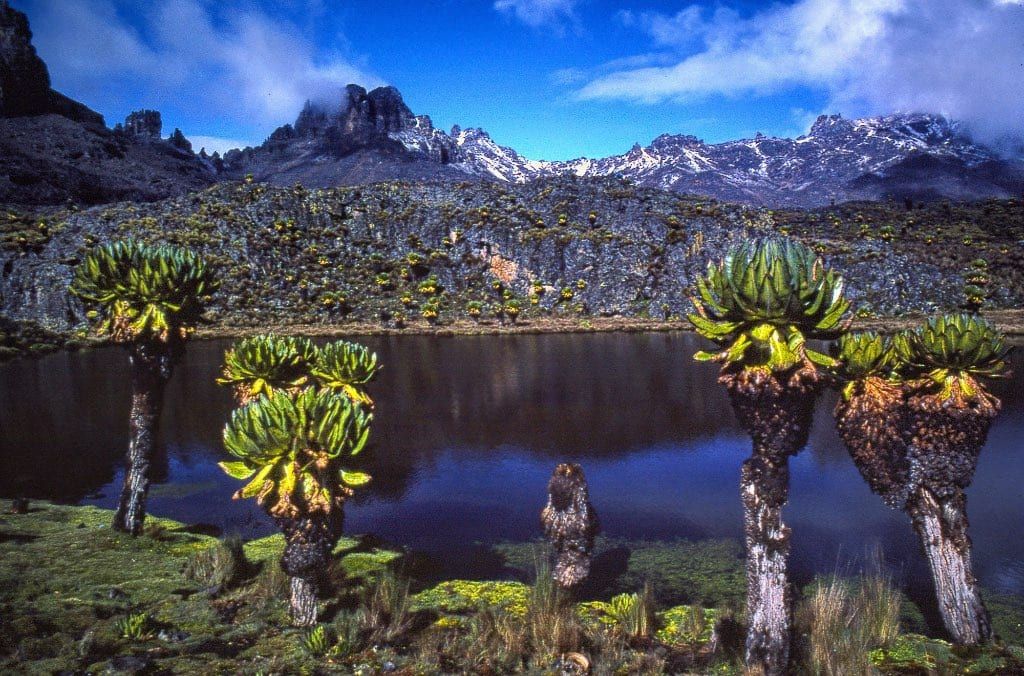
Chogoria is the one people remember. The 40km eastern approach passes Nithi Falls, the turquoise Lake Ellis, and Lake Michaelson, pinned beneath sheer cliffs known as the Temple. There are no huts on the high section, so parties camp the whole way and porters carry noticeably more gear as a result. Take it if you've got the extra day and don't mind pitching a tent every night.
Most trekkers link two routes rather than repeat one. Sirimon up and Chogoria down (or the reverse) covers the driest ascent and the best scenery in a single trip; Naro Moru is often paired with Sirimon for a faster descent instead. Guided treks typically build one of these combinations in already.
Burguret, Timau, Kamweti and the Meru approach see the remaining 5-10% of traffic. They're unmarked, need special arrangement with KWS in advance, and suit only experienced trekkers comfortable navigating without a maintained trail. Book one only through an operator who's run it before.
| Route | Distance | Start altitude | Huts or camping | Standout feature |
|---|---|---|---|---|
| Sirimon | ~29 km | 2,650 m | Huts all the way | Driest, most gradual ascent |
| Naro Moru | ~25 km | 2,400 m | Huts, but steep bog section | Shortest and fastest |
| Chogoria | ~40 km | 2,850 m | Camping only above the bandas | Nithi Falls, Lake Michaelson |
How Many Days Do You Need? Sample Itinerary
Most guided Point Lenana treks run 4-5 days. The full range spans 3 to 8 days depending on route and how much acclimatization time you build in. A typical Chogoria-up itinerary looks like this:
- Day 1: Chogoria Gate to Bandas camp
- Day 2: Bandas to Lake Ellis, 3,405m — 8km, about 4 hours
- Day 3: Lake Ellis to Lake Michaelson, 3,900m — 8km, about 6 hours
- Day 4: Summit Point Lenana, 4,985m, then descend to Shipton's Camp — 8km
- Day 5: Shipton's Camp to Old Moses or Sirimon Gate — 11km, about 4 hours
Summit day starts in the dark. Guides wake climbers around 2-3am so the final push over scree and rock reaches Point Lenana by sunrise, before afternoon cloud rolls in and the light over Batian and Nelion's ice-streaked spires fades.
Three-day itineraries exist and get some climbers to the top, but they skip a night above 3,000m and raise the odds of altitude sickness cutting a summit bid short. Add a day if you can. Six-to-eight-day trips exist mainly for parties combining two routes or building in a weather buffer, which matters most on Chogoria's longer approach.
How Difficult Is It, and Who Should Attempt It?
Point Lenana asks for stamina, not rock-climbing skill. There's no roped work on the standard trekking routes — the summit push is scree, loose rock, cold and thin air, stacked on legs already tired from four days of walking.
Batian and Nelion are a different sport. The Normal Route up Nelion covers 18-20 roped pitches and 7-8 hours of climbing; continuing to Batian, the true high point, adds up to 21 pitches at UIAA grade II with sections up to IV+. Roughly 200 people reach Nelion each year and about 50 reach Batian, against thousands who touch Point Lenana. Technical climbing trips need prior multi-pitch rock experience and a specialist operator, not a standard trekking package.
Good candidates for the Point Lenana trek are fit walkers used to multi-day hikes, comfortable with cold nights, willing to move slowly. Reconsider it if you have heart or lung conditions, can't spare five days for acclimatization, or plan to rush the summit in three days with no prior altitude experience.
Altitude Sickness and Safety
Altitude, not terrain, causes most problems on Mount Kenya. Above roughly 3,000m, oxygen levels drop noticeably, and near the summit they run about 40% below sea level. Watch for a headache that won't shift with painkillers, nausea, unusual fatigue on easy ground, or dizziness — the classic signs of acute mountain sickness.
Mount Kenya has a reputation among mountain doctors for HAPE, high-altitude pulmonary oedema, precisely because it's possible to gain height fast on short routes like Naro Moru. The fix is dull but effective: climb slowly, drink 3-4 litres of water a day, and add one extra acclimatization night above 3,000m if you can. Guides who've worked this mountain for years read pace and symptoms better than any app. Listen when they say slow down.
Gates operate 6am to 6pm only, partly because buffalo and elephant move through the forest zone after dark. Overnight climbers already on the mountain are the exception, but nobody should be hiking the lower forest sections after sunset.
If symptoms worsen at altitude, the only real treatment is descent. Don't wait for morning.
Permits, Guides, and Rules
Hiking Mount Kenya alone isn't allowed, full stop. Every trek and climb needs a KWS-licensed guide, and guides and porters must carry valid KWS ID cards.
Non-resident adults pay USD 70 for 24-hour park entry, and a separate mountain climbing permit (about USD 30 for non-residents) is required on top for summit attempts on Point Lenana, Nelion or Batian. Fees are no longer payable in cash at the gates — everything runs through the KWSPay platform on eCitizen, settled by M-Pesa or Visa card before you arrive. Check current rates on our Mount Kenya fees and hours page before booking, since a 2025 fee increase is still under legal review.
A guide does more than point the way. They set the pace that keeps a group safe from altitude sickness, register the itinerary with rangers at each gate, and read weather changes before they hit. Porters carry set load limits, so budget one porter per two or three days of food and gear on longer treks.
What It Costs to Climb Mount Kenya
Guided Point Lenana treks run from about $350 to $1,590 or more per person for 3-5 days, depending on group size, route and operator. That price typically covers the guide, cook and porter team, park entry and climbing permit fees, hut or camping fees on the mountain, and meals during the trek.
- Tips for guides, cooks and porters
- Gear rental such as sleeping bags or poles
- Kenyan visa and international flights
- Pre- or post-trek accommodation
Budget operators cluster near $350-$600 for barebones 4-day Naro Moru trips. Mid-range packages with better food and a Sirimon-Chogoria combination run $700-$1,100. Premium operators with private guides and an extra acclimatization day push past $1,500. Add flights, visa, gear rental and tips, and an all-in trip realistically lands between $2,800 and $5,000 per person — treat that figure as your total travel budget, not the trek price itself.
Tipping isn't optional in practice. A rough guide many operators quote: $15-20 per day for the head guide, $10-15 for assistant guides, $8-10 for cooks, and $5-8 per porter, handed over as a lump sum split among the crew at the end. Compare a few Mount Kenya tour options before booking to see what's actually included in the headline price.
Best Time to Climb Mount Kenya
January to March and July/August to October are the driest windows, and the ones worth booking around.
Skip the long rains, mid-March to May, and the short rains, October to December. Trails turn to mud, the Vertical Bog gets worse, and low cloud can hide the summit for days.
Season matters less than altitude for temperature. Expect around 25°C at the gate and well below freezing at the high camps in any month — pack for winter regardless of when you go.
Technical climbers time it differently. The Normal Route, on Nelion's south ridge, climbs best December to March, while Batian's north face route is better July to September, when the rock is drier and less likely to be iced over.
What to Pack: Gear and Accommodation on the Mountain
Temperatures swing from about 25°C at the gate to below -15°C at the high camps, so layering matters more than any single piece of gear. Build around thermal base layers, an insulated or down jacket, a waterproof outer shell, a warm hat and gloves, and waterproof, broken-in hiking boots.
- Sleeping bag rated below freezing
- Trekking poles for the scree
- Headlamp with spare batteries
Sirimon and Naro Moru both have huts the whole way — Old Moses, Mackinder's, Shipton's Camp among them — so a lighter pack works fine. Chogoria has no huts above the bandas, meaning full camping gear and a heavier porter load. Huts save weight and offer a stove to dry wet kit; camping earns you the scenery Chogoria is known for. Pick based on what you're willing to carry, not which sounds tougher.
Round out the kit with sunscreen (equatorial sun at altitude burns fast), a basic first-aid kit, any personal medication, and water purification tablets or a filter. Mountain streams look clean. They aren't guaranteed safe.
FAQs
How long does it take to climb Mount Kenya?
Most guided treks to Point Lenana take 4-5 days. The full range runs 3 to 8 days depending on route and how much acclimatization time you build in. Guides call the pace pole pole, meaning slowly, and it's the right approach at altitude.
Do you need technical climbing skills to climb Mount Kenya?
Not for Point Lenana (4,985m), which is a trek with no rope work. Batian (5,199m) and Nelion (5,188m) require roped multi-pitch rock climbing rated UIAA II to IV+, and prior climbing experience is expected.
How much does it cost to climb Mount Kenya?
Guided trek packages alone run roughly $350-$1,590+ per person depending on route, group size and operator. Non-resident park entry adds USD 70 per day. Factor in flights, visa, gear rental and tips, and an all-in trip budget lands between $2,800 and $5,000.
Can you climb Mount Kenya without a guide?
No. Solo hiking isn't permitted anywhere in Mount Kenya National Park, and guides and porters must carry valid KWS ID cards. Book through a licensed operator rather than arranging one informally at the gate.
What is the best route up Mount Kenya?
Sirimon is the most gradual and best for acclimatization. Naro Moru is the shortest but steepest, with the notorious Vertical Bog. Chogoria is the most scenic but requires full camping. Many trekkers go up Sirimon and down Chogoria, or the reverse.
When is the best time to climb Mount Kenya?
January to March and July/August to October are the dry windows worth booking. Avoid the long rains (mid-March to May) and short rains (October to December), when trails turn to mud and cloud hides the summit.
Is Mount Kenya harder than Kilimanjaro?
Kilimanjaro is higher, at 5,895m, but non-technical the whole way up. Point Lenana is a comparable trekking challenge in fewer days, but climbers aiming for Mount Kenya's true summits, Batian and Nelion, take on rock climbing Kilimanjaro never requires.
How dangerous is altitude sickness on Mount Kenya?
Real risk starts around 3,000m, and Mount Kenya sees a disproportionate share of the world's HAPE cases because its routes allow rapid altitude gain. Ascend slowly, drink 3-4 litres of water a day, and add an acclimatization night if your schedule allows it.