Two mountains define East Africa's skyline, and most climbers heading to Kenya or Tanzania end up weighing one against the other. Kilimanjaro is the higher, more famous choice: Africa's roof at 5,895m, its snow-streaked dome visible from a hundred miles across the Tanzanian plains. Mount Kenya, 320km to the north, is smaller and wilder — a jagged volcanic core topping out at 5,199m on Batian, with a fraction of the foot traffic. Both mountains sit inside UNESCO World Heritage-listed national parks, and both can be reached by a fit, well-prepared trekker in under two weeks.
This guide puts the two side by side on height, difficulty, cost, crowds and scenery, then ends with a direct recommendation for five kinds of traveler, plus how to climb both mountains on a single East Africa trip.
Mount Kenya vs Kilimanjaro at a Glance
The two mountains sit about 320km (200mi) apart in the same corner of East Africa, and both are UNESCO World Heritage Sites recognized for their glaciated peaks and afro-alpine ecosystems. Kilimanjaro was inscribed in 1987; Mount Kenya followed a decade later, in 1997. For more on the mountain's history and visitor logistics, see our Mount Kenya overview. The table below lines up the numbers that actually decide most people's choice.
| Mount Kenya | Kilimanjaro | |
|---|---|---|
| Highest point (technical) | 5,199m, Batian — grade IV-IV+ rock climb | 5,895m, Uhuru Peak — non-technical |
| Trekking summit | Point Lenana, 4,985m | Uhuru Peak, 5,895m |
| Typical duration | 4-6 days | 6-9 days |
| Typical cost per person | USD 1,000-4,000 | USD 2,000-6,000 |
| Annual summit attempts | ~15,000 (Point Lenana) | 35,000-50,000 |
| Nearest airport | Nanyuki, 40-50 min from Nairobi | Kilimanjaro Intl, via Arusha |
Height, Peaks and Geology
Height alone is misleading here, because each mountain's summit is really a cluster of peaks with very different profiles and different rules for who can stand on top.
Kilimanjaro's Three Volcanic Cones
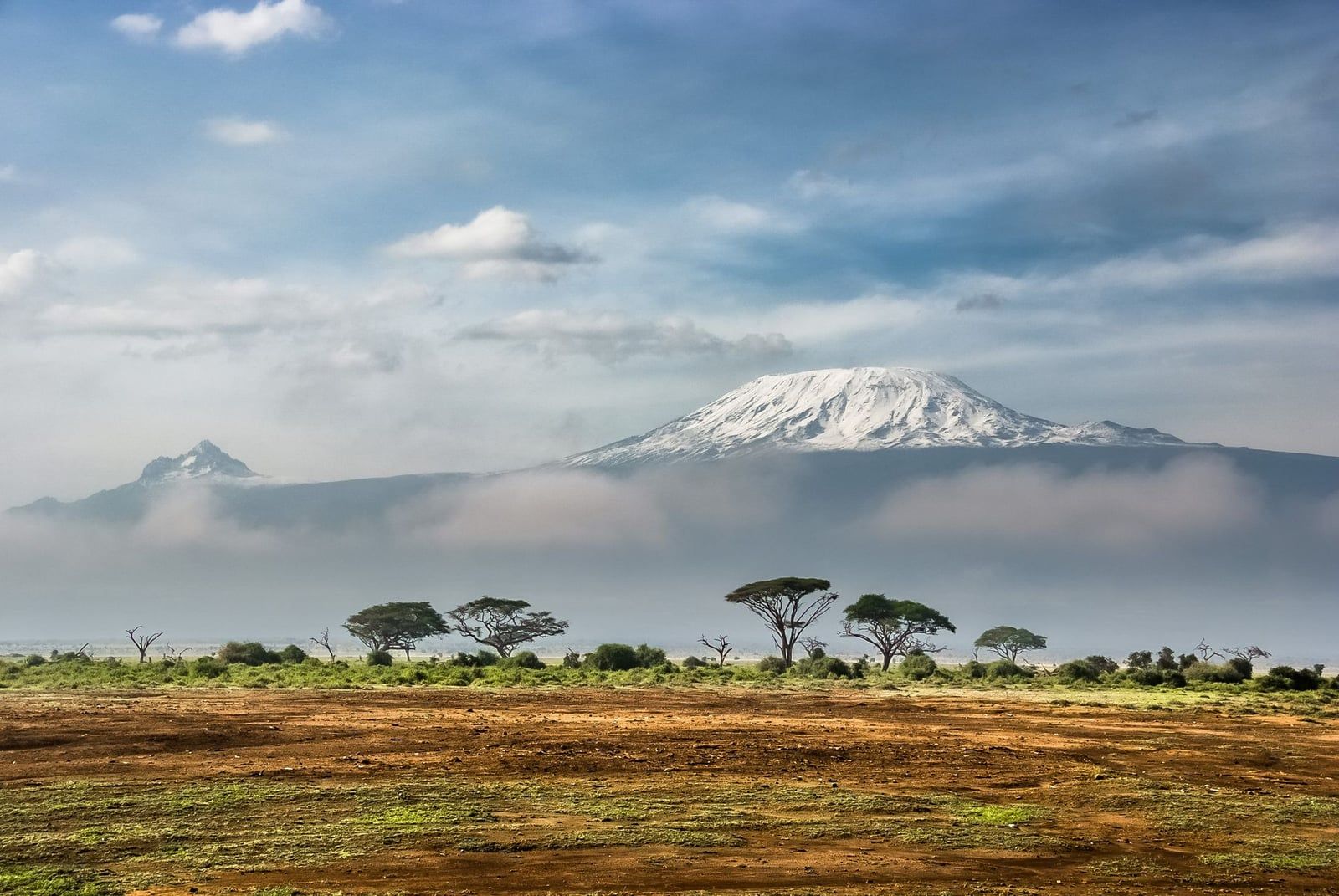
Kilimanjaro is really three volcanic cones fused into one massif: Kibo, Mawenzi and Shira. Kibo is the tallest, and it's the one every trekker is aiming for — its crater rim, Uhuru Peak, is the 5,895m point that makes Kilimanjaro Africa's highest mountain. Mawenzi (5,149m) is a jagged, eroded second cone reachable only by technical rock climbers. Shira (4,005m) is a broad, worn plateau most trekkers cross without realizing they're standing on a separate peak.
Mount Kenya's Twin Peaks and Point Lenana
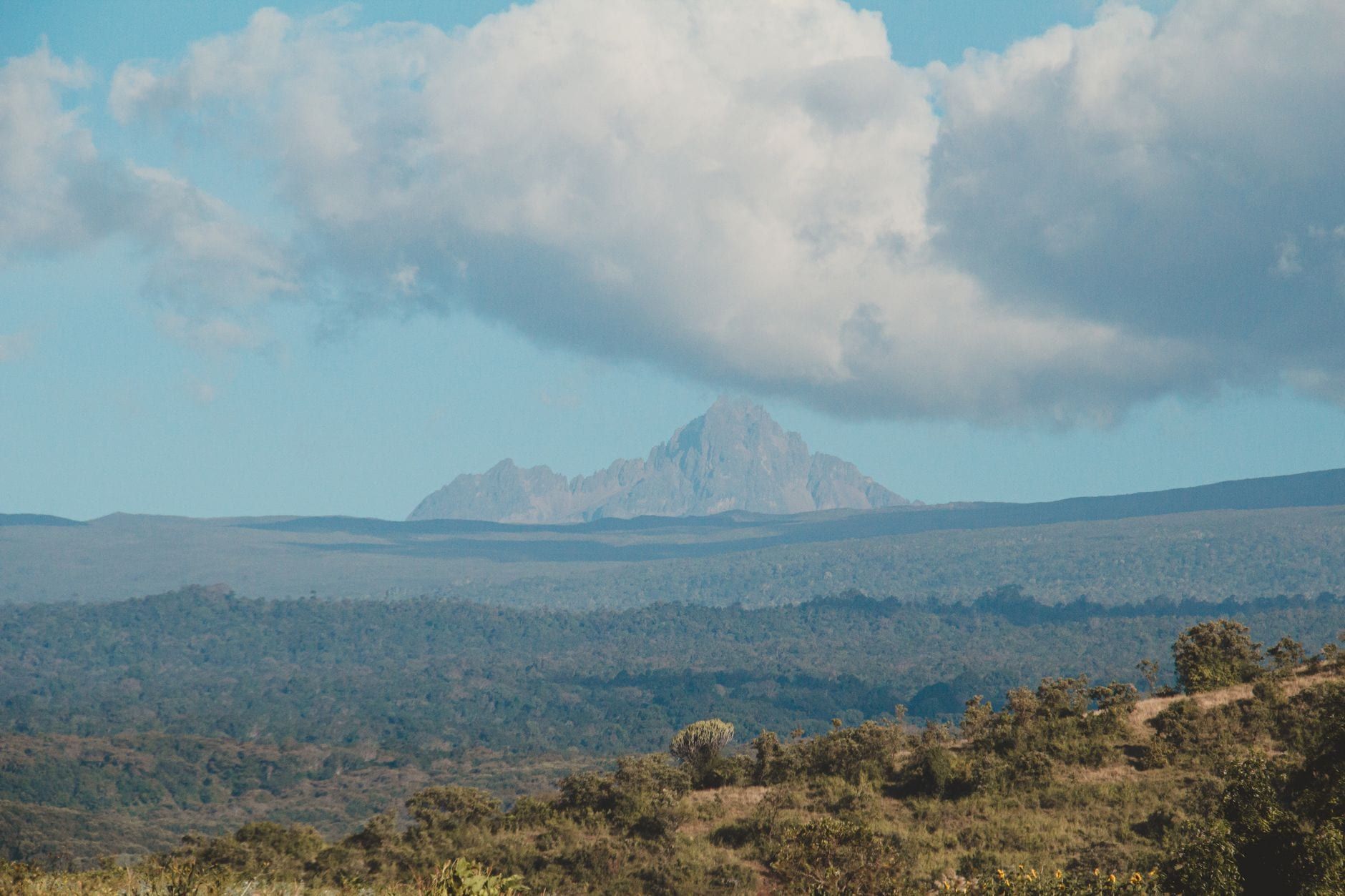
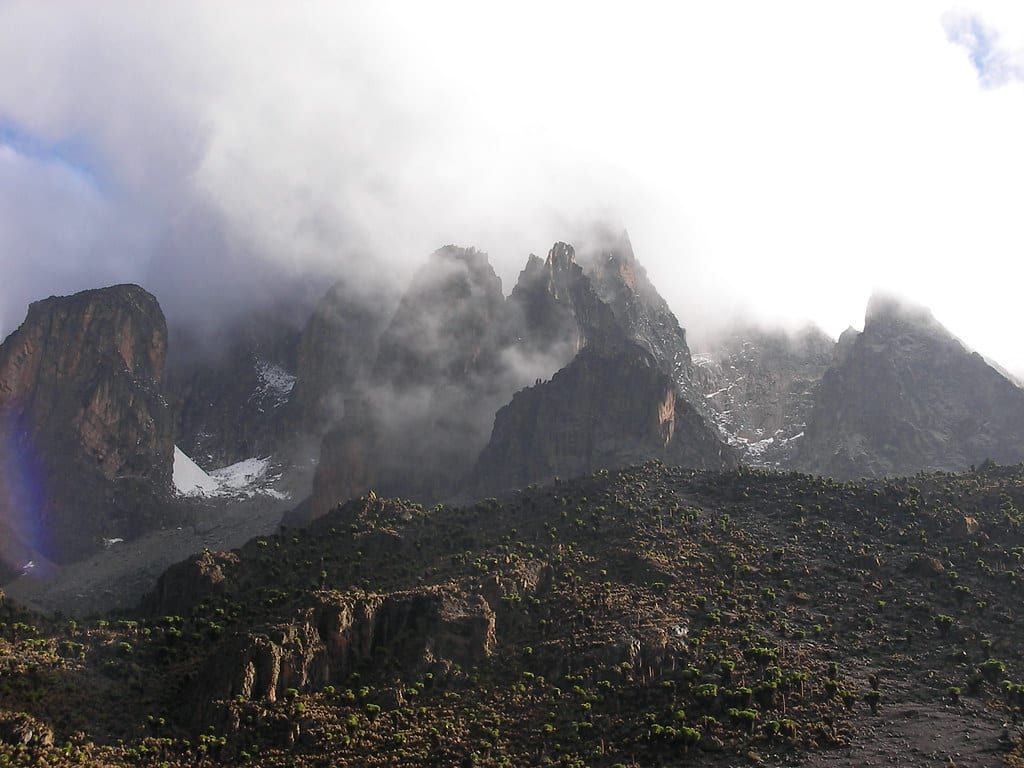
Mount Kenya's high point is actually two peaks. Batian (5,199m) and Nelion (5,188m) stand just 650m apart across a knife-edge ridge, and neither is reachable without ropes. The peak nearly everyone climbs instead is Point Lenana, a third summit at 4,985m that needs no technical gear — a steep scramble, not a climb. Mount Kenya's base sprawls wider than Kilimanjaro's too: roughly 120km across versus 65km, the legacy of a volcano that once stood an estimated 6,500m tall before three million years of erosion carved it down to today's jagged core.
Difficulty: Technical Climbing vs Non-Technical Trekking
Most people asking which mountain is harder actually mean two different questions: how hard is the standard trekking route, and how hard is the true summit. The answers point in opposite directions.
The Non-Technical Trekking Summits
Uhuru Peak and Point Lenana are the two summits nearly every visitor is actually aiming for, and neither needs a rope, harness or climbing background. Uhuru Peak is a long, high-altitude walk, physically brutal near the top from cold and thin air but technically just hiking. Point Lenana is shorter and lower, but the final hour is steeper and rockier, with some scrambling over loose scree before the top.
The Technical Summits: Batian, Nelion and Mawenzi
Batian, Mount Kenya's true summit, is a grade IV+ rock climb up the North Face Standard Route, or grade IV via the South-West Ridge — proper multi-pitch climbing with helmets, ropes and a specialist guide. Nelion sits just below it, graded similarly, and is often climbed as a stepping stone to Batian. Kilimanjaro's technical equivalent is Mawenzi, its second cone, which draws only a handful of specialist parties a year. Anyone after that kind of route should book through a technical climbing operator rather than a standard trekking package, since the gear, guide ratio and permits are entirely different.
Summit success rates on Kilimanjaro's trekking routes run from roughly 70-80% on shorter itineraries up to 90-98% on longer, better-acclimatized schedules. Mount Kenya's Point Lenana success rate sits a bit lower, around 60-80%, driven mainly by shorter standard itineraries and steeper terrain near the top. On both mountains, altitude sickness becomes a real risk from about 2,500m upward. Pushing through a headache instead of descending is how a minor case turns into an emergency.
Routes, Huts and the On-Mountain Experience
Where you sleep and who you share the trail with change a lot between the two mountains, and the route networks work quite differently.
Kilimanjaro's Routes and Huts
Kilimanjaro has six or seven official routes: Machame, Marangu, Lemosho, Rongai, the Northern Circuit, Umbwe and Shira. Marangu is the only one with permanent huts along the way; every other route means tents at designated campsites, carried and pitched each night by your crew. Machame and Lemosho are the scenic favorites. Umbwe is the steepest and least forgiving of the standard options.
Mount Kenya's Routes and Camps
Mount Kenya has around seven to nine routes, though most trekkers use just three. Sirimon is the gentlest ascent and the most popular. Naro Moru is the shortest but throws in the 'Vertical Bog', a thigh-deep waterlogged slog above the forest line. Chogoria, entering from the east, is the most scenic, tracing Nithi Falls and the glacial lakes Ellis and Michaelson. Most trekkers go up Sirimon or Chogoria and down Naro Moru, to see two faces of the mountain instead of retracing their steps — our full route-by-route climbing guide breaks down each option in detail. Huts range from free-choice camping to privately-run stone shelters like Mackinder's Camp and Shipton's Camp, near 4,200m, where comfort varies a lot by operator.
Kilimanjaro National Park Authority legally requires every climber to hire a licensed guide, no exceptions. Mount Kenya has no such law, but hiking alone is still a bad idea on a mountain with sudden fog, rockfall and no phone signal above the forest line. A licensed guide is standard practice here too, and every reputable Mount Kenya trekking itinerary includes one.
Duration, Best Season and Weather
A full Kilimanjaro trek runs 6-9 days depending on route; Mount Kenya's standard Point Lenana circuit takes 4-6 days. That extra time on Kilimanjaro isn't just distance — longer itineraries build in more acclimatization days, which is exactly why success rates climb toward 90%+ on the eight- and nine-day routes.
Both mountains stack the same ecological zones on the way up: montane rainforest, then bamboo, then afro-alpine moorland, then alpine desert near the summit. Expect rain most afternoons in the forest belt and hard frost at night above 4,000m, whichever mountain you pick.
- Dry season one: mid-December through mid-March, generally clear and busy.
- Dry season two: June through mid-October, cooler with good lower-slope wildlife viewing.
- Avoid April-May: the long rains turn trails to mud on both mountains.
- Avoid November: short rains bring fog and slippery moorland sections.
Cost Comparison
Kilimanjaro treks typically run USD 2,000-6,000 per person, swinging on route length, group size and operator quality. Two things push the price up: Tanzania's park fees are steep and charged daily, and Kilimanjaro National Park Authority mandates a minimum crew size that adds up fast on the longer routes.
Mount Kenya runs about USD 1,000-4,000 per person, often close to half the price of a comparable Kilimanjaro trip, with five-day climbs starting around USD 1,000. Lower Kenya Wildlife Service park fees and smaller required crews explain most of the gap. Check current rates on the park entry fees page before booking, since Kenya's park tariffs were revised in 2025.
Both prices should include gate transfers, park and camping fees, crew wages, meals on the mountain and rental gear if you need it. What's rarely included: tips for guides and porters, budgeted separately, and pre-climb accommodation in Nairobi, Nanyuki or Arusha. A quote that looks unusually cheap is almost always cutting crew pay or skipping a rescue fee. Ask directly what's excluded before you sign anything.
Crowds, Scenery and Wildlife
Numbers, views and animals are where the two mountains feel most different day to day, even though the summit stats get most of the attention.
Crowds and Numbers
Kilimanjaro draws an estimated 35,000-50,000 summit attempts a year, with roughly 80,000 guides and porters supporting them on the mountain in total. Mount Kenya sees well under half that: about 15,000 trekkers head for Point Lenana annually, and only 50-100 attempt Batian, with roughly 200 more on Nelion. On a September morning on Machame you'll pass dozens of other groups; on Sirimon the same week, maybe three.
Scenery
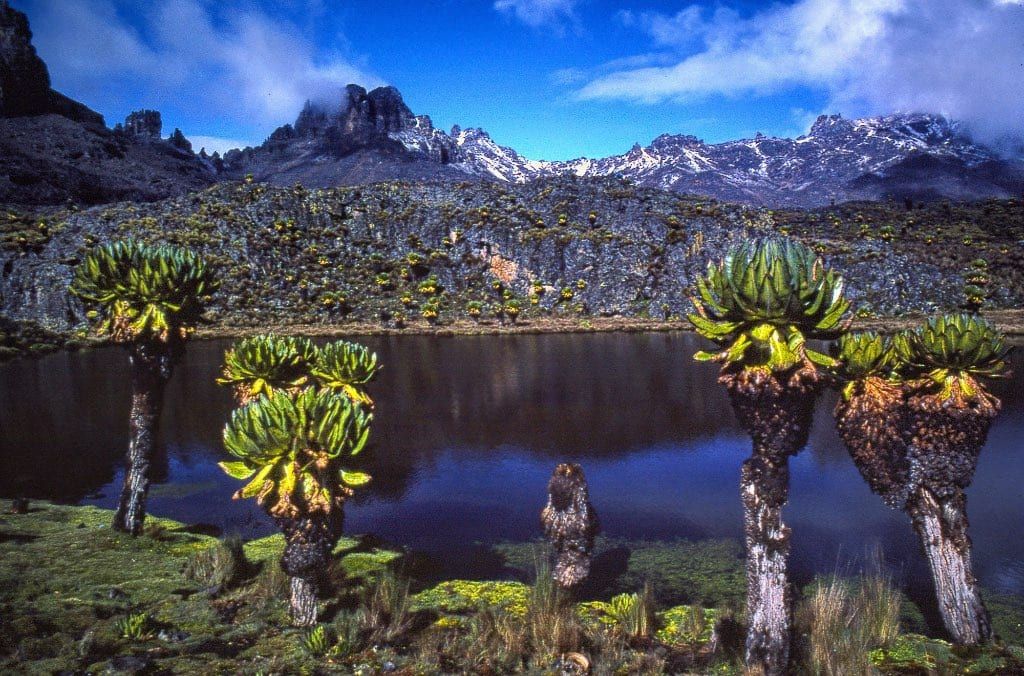
Kilimanjaro's signature image is the one on every postcard: a solitary, snow-streaked dome floating above the savanna, visible from a hundred miles off. Mount Kenya's drama sits closer and sharper — jagged rock spires, glacial tarns holding the peaks' reflection, and the Chogoria route's waterfalls and cliff-bound lakes. Kilimanjaro is the bigger view from far away. Mount Kenya is the better view from inside it.
Shared Wildlife
Above 3,000m on both mountains, giant lobelias and giant groundsels rise out of the moorland like something from another planet, plants found almost nowhere else on Earth. Lower down, both parks hold buffalo, colobus and blue monkeys, and elephant near the boundaries. Mount Kenya's forests are also one of the last refuges of the mountain bongo, a striped antelope with fewer than 150 individuals left in the wild.
Which Mountain Should You Climb? A Decision Guide
Skip the generic answer. Here's a direct pick for five common types of traveler, plus how to do both mountains on one trip.
First-Timer on a Tight Schedule: Kilimanjaro
If this is your first high-altitude trek and you've got one shot at it, Kilimanjaro's Uhuru Peak is the safer bet. Guiding is mandatory and standardized, the infrastructure is more built out, and the longer standard itineraries, seven or eight days, push success rates toward 90%+ by giving you more time to acclimatize.
Experienced Hiker Wanting Solitude or a Technical Challenge: Mount Kenya
Mount Kenya rewards people who've hiked at altitude before and want fewer crowds and sharper terrain. Batian and Nelion are a different sport entirely from anything on Kilimanjaro's trekking routes, and even the non-technical Sirimon-Chogoria combination feels wilder underfoot than Kilimanjaro's well-trodden paths.
Budget Traveler Combining a Safari: Mount Kenya
A 4-6 day Mount Kenya trek costs roughly half of a comparable Kilimanjaro climb, leaving more of a two-week Kenya trip free for a safari. Nanyuki, the trek's usual base, sits close to Ol Pejeta Conservancy and Lewa Wildlife Conservancy. Check our directions guide for the drive times from Nairobi before building your itinerary.
Bucket-List 'Highest Point in Africa': Kilimanjaro
There's only one honest answer if the goal is standing on Africa's literal highest point: Kilimanjaro's Uhuru Peak, at 5,895m, no rope required. Mount Kenya's non-technical summit tops out 910m lower, and its true high point demands a rock climb most trekkers aren't equipped for.
Combining Both Mountains
The two mountains sit close enough, about 320km apart, to combine into one East Africa trip through Nairobi and Arusha. Most operators suggest climbing Mount Kenya first: at 4-6 days and topping out below 5,000m, it works as a shorter acclimatization warm-up before the longer, higher push on Kilimanjaro a week or two later. Build in a couple of rest days between the two treks, plus travel time between Nairobi and Arusha, before committing to back-to-back summit pushes.
Frequently asked questions
Which is harder to climb, Mount Kenya or Kilimanjaro?
It depends which summit you mean. Kilimanjaro's Uhuru Peak is non-technical but longer and higher, at 5,895m. Mount Kenya's trekking summit, Point Lenana, is lower at 4,985m but the final approach is steeper and rockier. Go beyond the trekking summits and Mount Kenya wins outright: Batian is a grade IV-IV+ rock climb, a different level of difficulty from anything on Kilimanjaro's standard routes.
Is Mount Kenya cheaper than Kilimanjaro?
Yes. Mount Kenya treks run roughly USD 1,000-4,000 per person versus USD 2,000-6,000 for Kilimanjaro, often close to half the price for a similar itinerary. Lower Kenya Wildlife Service park fees and smaller required crews explain most of the difference.
Can beginners climb Mount Kenya, or should they start with Kilimanjaro?
Both have non-technical trekking summits that fit but inexperienced hikers can reach. Kilimanjaro has more established infrastructure and mandatory standardized guiding, making it the more common first choice. Mount Kenya suits beginners who want a shorter, quieter and more rugged introduction instead.
Can you climb both Mount Kenya and Kilimanjaro on the same trip?
Yes, they're about 320km (200mi) apart and easily combined via Nairobi and Arusha. Many climbers tackle Mount Kenya first, using its shorter, lower-altitude trek as acclimatization before attempting the longer Kilimanjaro climb.
What is the best time of year to climb Mount Kenya or Kilimanjaro?
Both mountains share the same two dry windows: mid-December to mid-March, and June to mid-October. April, May and November bring the long and short rains, with muddy trails and lower visibility on both.
How many people climb Kilimanjaro compared to Mount Kenya each year?
Kilimanjaro sees an estimated 35,000-50,000 summit attempts annually. Mount Kenya sees well under half that overall, with about 15,000 trekkers a year heading for Point Lenana and only 50-100 attempting the technical Batian Peak.