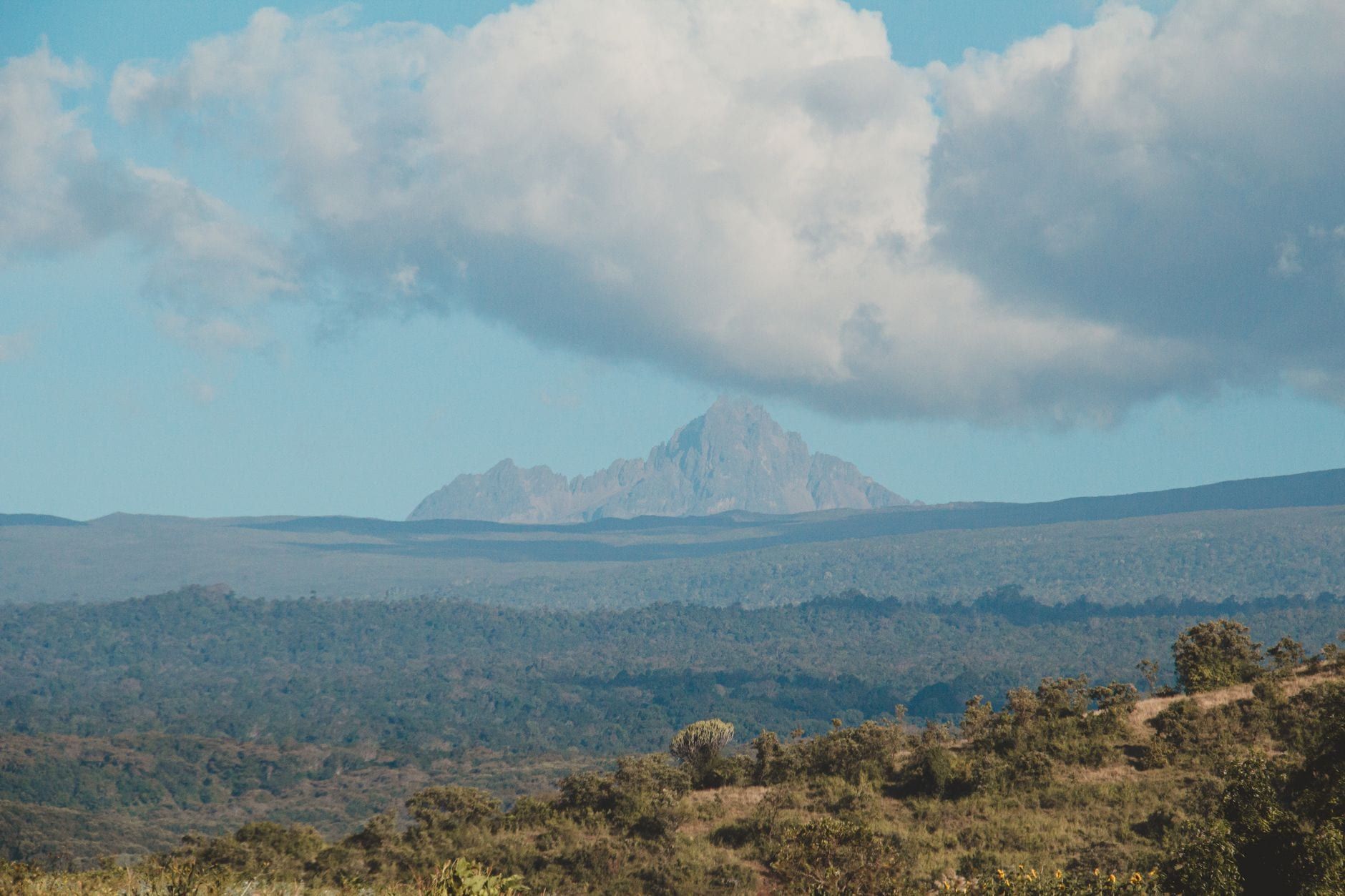
Most visitors picture Kenyan wildlife as lions crossing open grass in the Mara. Mount Kenya works differently: a forested, glacier-topped volcano rising to 5,199 m, where animals move through dense canopy and thin alpine air rather than across visible plains. A trekker climbing toward Point Lenana might spot a colobus monkey in the treetops, hear a bushbuck crash through the undergrowth, and never see a lion at all. That's normal, not bad luck.
This guide organizes Mount Kenya's animals the way the mountain itself does: by altitude. Forest and bamboo hold the biggest mammals lower down; heath, moorland and alpine desert above the treeline favor a different, hardier set of species. A handful of rare or headline animals get their own section, and the last two parts cover when you're likeliest to actually see something, plus what to do if you do.
What Makes Mount Kenya's Wildlife Different
Mount Kenya isn't built for game drives. There's no road network for open vehicles, no wide-open sightlines, and no habituated pride of lions posing on a rock. If you want a checklist of Big Five ticks in a day, book a safari extension instead; if you want to understand how altitude shapes what actually lives on this mountain, keep reading.
Five zones, one mountain
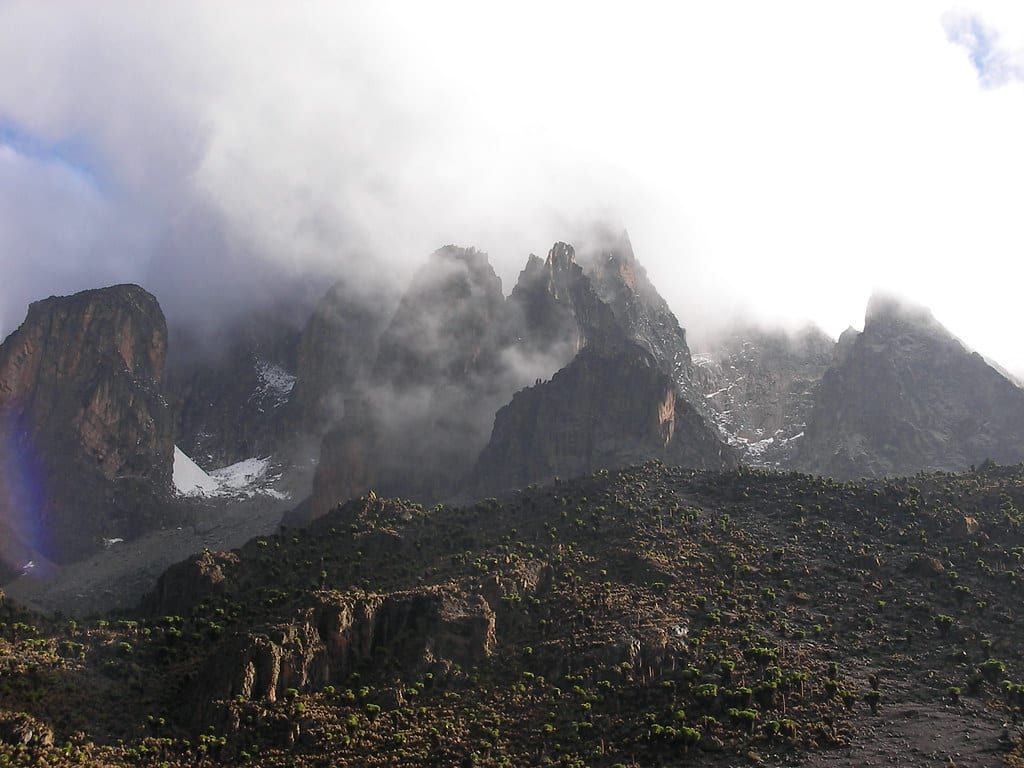
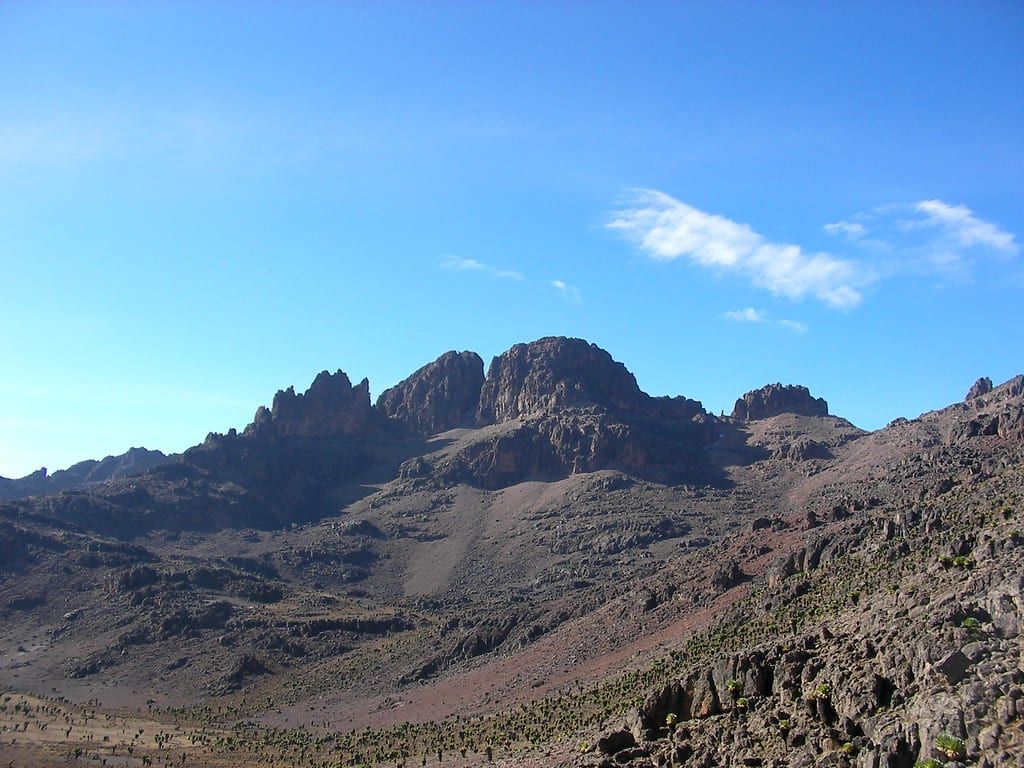
The wildlife changes as fast as the plants do. Mount Kenya's slopes divide into distinct ecological bands: cultivated lowland farms, montane rainforest, a bamboo belt, moorland and afro-alpine heath, and finally bare rock and ice near the summit. Each band supports a different animal community, and that structure is what organizes the rest of this guide.
A UNESCO-listed ecosystem
Mount Kenya National Park and Natural Forest was inscribed as a UNESCO World Heritage Site in 1997, recognized for its afro-alpine flora and glacial landscapes rather than for big-game density. The property extends north to Lewa Wildlife Conservancy and Ngare Ndare Forest Reserve through a wildlife corridor, which is where several of the region's headline safari species actually live. For background on the mountain's history and status, see our Mount Kenya overview.
Forest & Bamboo Zone Wildlife (Below ~3,000m)
Below roughly 3,000 m, montane forest and bamboo hold the mountain's largest mammal biomass. This is the zone most trekkers walk through on the first day or two out of Sirimon, Naro Moru or Chogoria, and it's also where sightings are least predictable. Thick cover means most animals hear or smell you long before you see them.
Elephant and buffalo on the move
Forest elephant and Cape buffalo cross the lower slopes on the same worn paths generation after generation, using corridors that cut through the bamboo belt between the lower and upper forest. Adult bamboo isn't palatable to most animals, so the belt itself carries less resident wildlife - but it's a busy transit route, not an empty one. Guides often point out fresh dung or flattened stems as proof something passed through hours earlier, even without a direct sighting.
Colobus and Sykes' monkeys overhead
Black-and-white colobus monkeys are the easiest wildlife win on Mount Kenya. Look up into the canopy near the gates and you'll likely hear their guttural croaking before you spot a flash of white fur against dark branches. Sykes' monkeys travel in noisier troops lower down, often around campsites where food smells linger.
The mountain bongo and other forest antelope
Bushbuck, waterbuck, duiker and the tiny suni antelope share the forest floor, but the prize sighting is the mountain bongo - a striped, spiral-horned antelope now critically endangered, with fewer than 200 left in the wild. Most survivors live in Mount Kenya's southern forests, where Mount Kenya Wildlife Conservancy and Kenya Wildlife Service run breeding and reintroduction programs. Actually seeing one on a trek is rare. Knowing you're walking through its last stronghold isn't.
Leopard, and a black one on camera trap
Leopard move through this forest mostly at night, and a melanistic (all-black) leopard has been verified here by camera trap - a genuine rarity worth knowing about even if you'll almost certainly never see it. Lion and African wild dog show up in old records and occasional reports, but both were far more common before 1900, when buffalo, rhino, lion and antelope were common across the lower regions. Hyena and smaller predators are the more realistic possibility today.
Small hunters and forest birds
Genet, civet, serval and slender mongoose hunt the forest edges after dark, usually seen, if at all, as eyes catching a torch beam near camp. By day the birds carry the zone: Hartlaub's turaco flashes crimson wing feathers through the leaves, hornbills clatter overhead, and the iridescent Narina trogon sits still enough deep in the canopy that you can miss it entirely.
Heath, Moorland & Afro-Alpine Zone Wildlife (~3,000–4,500m)
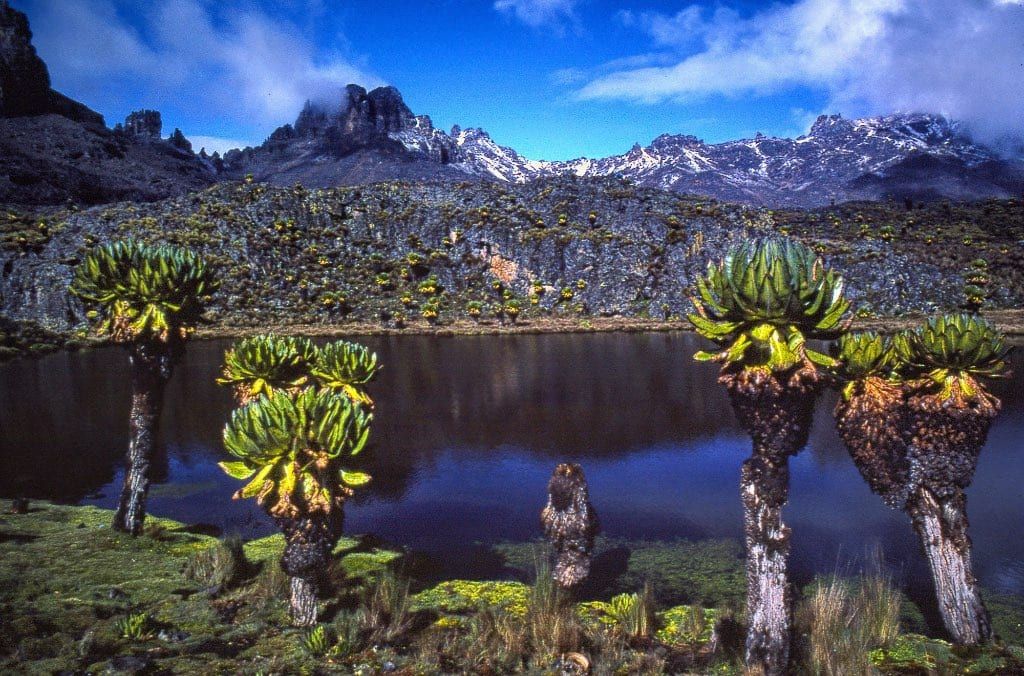
Cross the treeline and the mountain empties out. Above roughly 3,000 m, forest gives way to tussock grass, giant lobelias and groundsels, and the animals that remain are built for cold, thin air rather than cover.
Rock hyrax at every camp
Rock hyrax colonies live in the boulder fields around most camps and huts, and they're the most reliable mammal sighting on the whole mountain - small, guinea-pig-shaped, and bold around anything that smells like food. Don't feed them. A camp-habituated hyrax raids tents and packs once it's learned that humans mean snacks.
Eland, and the odd lion or hyena
Common eland, Africa's largest antelope, move through the open moorland in loose herds, and hikers occasionally report lion or spotted hyena tracks at this altitude too, though sightings stay infrequent. Leopard is the only large carnivore regularly present in the afro-alpine zone - everything else up here is passing through, not resident.
Birds built for altitude
The scarlet-tufted malachite sunbird feeds almost exclusively on giant lobelia nectar above 3,000 m; pause at a lobelia stand and you'll likely catch one working the flower spikes. Lammergeier (bearded vulture), augur buzzard and alpine chat all patrol the moorland, and Verreaux's eagle specializes in hunting rock hyrax - watch the ridgelines and you might see one stoop.
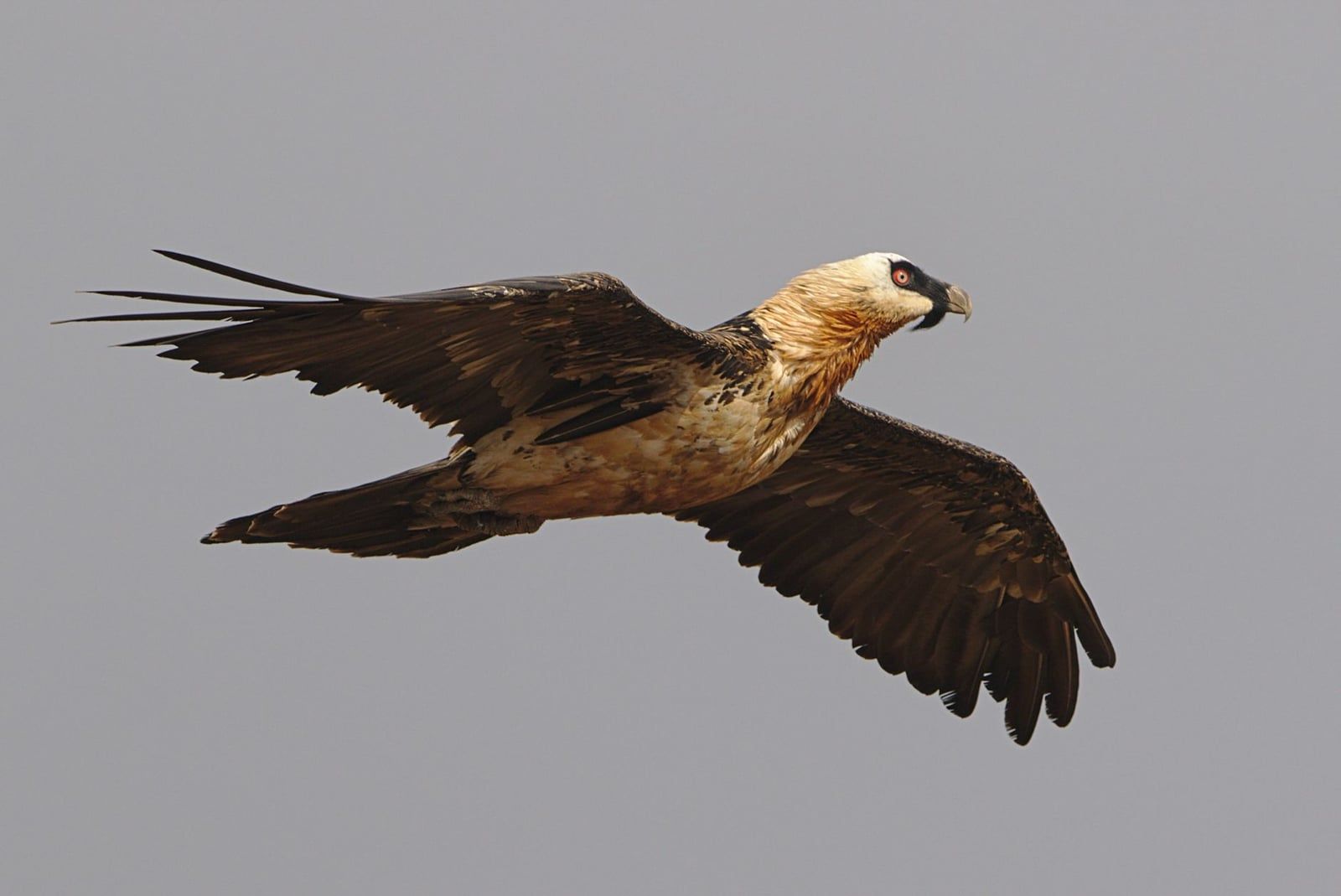
Life at the edges
There are no bees, wasps, fleas or mosquitoes at this altitude, though butterflies still work the flowers and introduced trout swim the glacial tarns. Giant mole-rat and highland shrew are more often inferred from diggings than actually seen. Even the bare nival zone above 4,500 m has recorded rare visits from buffalo, elephant, leopard and hyena - proof that a handful of animals will go almost anywhere on this mountain, even if you shouldn't plan on meeting them there.
Endangered & Signature Species Spotlight
A handful of species carry most of the mountain's reputation, and they deserve more than a line buried in a species list.
Mountain bongo
Fewer than 200 mountain bongo survive in the wild, almost entirely in forests around Mount Kenya and the neighboring Aberdares, which makes this striped antelope one of Africa's rarest large mammals. Mount Kenya Wildlife Conservancy runs a breeding program aimed at returning captive-bred bongo to secure forest habitat, and a small number of animals have already been released back into the wild.
Black rhino: gone from the mountain
Black rhinoceros were part of the lower forest and bamboo fauna before 1900, but they're locally extinct on Mount Kenya today. If a rhino sighting matters to your trip, that box gets ticked at Lewa Wildlife Conservancy or Ol Pejeta Conservancy nearby, not on the mountain itself.
The black leopard
A verified melanistic leopard, confirmed by camera trap in Mount Kenya's forests, is one of only a handful of documented black leopard records anywhere on the continent. It's the kind of animal that shows up on a trail camera far more often than in front of a hiker.
Grevy's zebra at Lewa
The Lewa Wildlife Conservancy extension to Mount Kenya National Park holds the largest resident population of Grevy's zebra in the world, the more heavily striped, big-eared cousin of the familiar plains zebra. A wildlife corridor connects Lewa to the mountain, which is why a savanna specialist and a forest antelope like the bongo end up on the same UNESCO listing despite living in completely different habitats.
Jackson's francolin
This chunky, ground-dwelling game bird is near-endemic to Mount Kenya and the Aberdares. You're more likely to hear its harsh call rising from the moorland grass than to get a clean look at one.
When and Where You're Most Likely to See Wildlife
Dawn and dusk are peak activity windows for most Mount Kenya mammals, mirroring the pattern across Kenya's parks generally - animals move and feed in the cool hours and rest through the heat of the day. Plan camp departures early and you'll cross forest sections when buffalo and elephant are more likely to be active nearby.
Dry-season treks, roughly June to October plus a January-February window, give the clearest trails and the best visibility, since thinner ground cover makes tracks and animals easier to spot. The long rains (March-May) and short rains (November) turn trails to mud and push most wildlife deeper into cover.
Route choice matters too. The Chogoria corridor keeps some of the most intact montane forest on the mountain, giving marginally better odds of forest species than drier approaches like Sirimon or Naro Moru - it's also, incidentally, the most scenic way up, passing Lake Ellis and Lake Michaelson. Our complete route guide breaks down what each approach involves, and our trekking tours can build an itinerary around it. Anyone aiming instead for the technical summits of Nelion or Batian will spend most of their time on rock and ice, well outside prime wildlife habitat - see our climbing tours for that route.
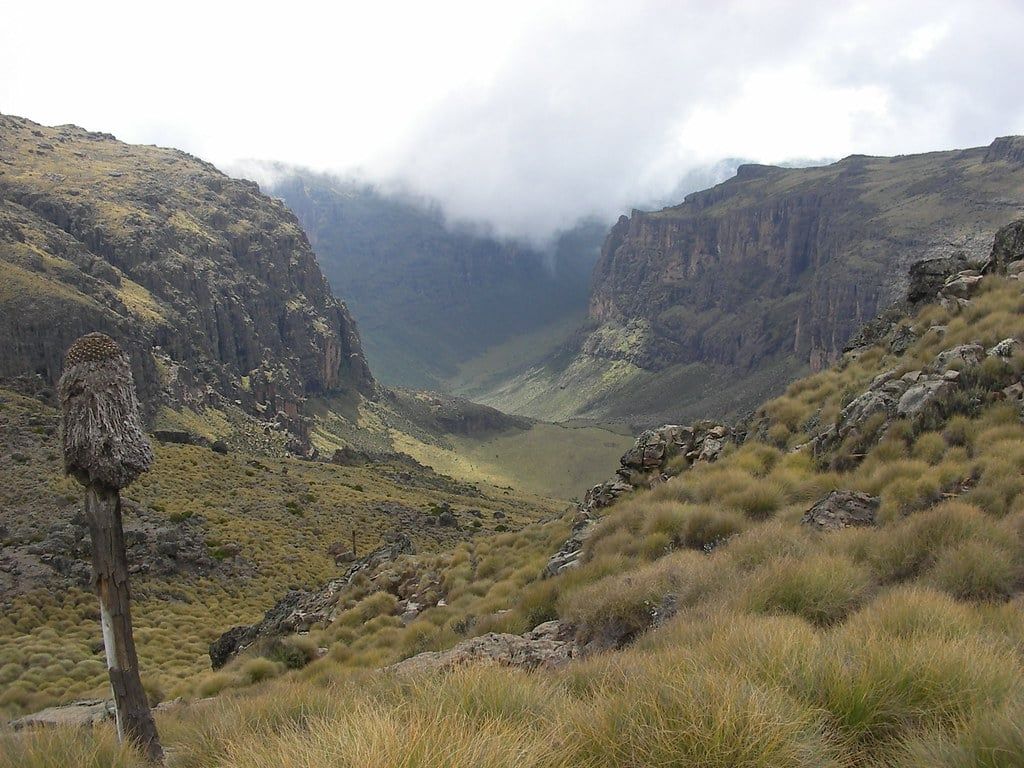
Camera traps set by researchers pick up far more species than any hiker sees in a week on the trail - genet, serval, aardvark and porcupine all turn up on camera far more often than in person. Set expectations accordingly: most days deliver birds, monkeys, hyrax and fresh tracks rather than a lineup of big mammals. That's the honest version of a Mount Kenya trek, and it's genuinely different from a Big Five safari - our guide to Mount Kenya versus Kilimanjaro covers more of what to expect on the mountain itself.
Wildlife Safety & Etiquette on the Trail
Never feed monkeys, hyrax or birds, however tame they look around a picnic spot or camp. Fed animals lose their wariness, and a hyrax or monkey that learns to associate people with food becomes a nuisance, or worse, for the next group through.
If you meet buffalo or elephant on the trail, stop, stay calm, and give them room to move off. Both animals can turn dangerous when startled or cornered on a narrow path, and neither should be approached for a photo. Your guide will typically spot them first and reroute or wait - trust that call rather than pushing for a closer look. Hiking without a licensed guide isn't allowed on Mount Kenya in any case; check current park entry and permit rules before you go.
Secure food at camp. Rock hyrax and rodents raid tents and packs left open, and a chewed-through bag of trail mix is a common complaint on the mountain's huts. Zip everything away at night, and keep a respectful distance for photography, especially around bongo or black leopard habitat in the southern forests - these are the animals conservation programs are actively trying to protect.
Frequently asked questions
Can you see the Big Five on Mount Kenya?
Not reliably. Lion and rhino are essentially absent from the mountain now, leopard and buffalo are present but stay hidden in dense forest, and elephant cross the lower slopes without much fanfare. This isn't an open-savanna Big Five destination - pair it with Lewa or the Maasai Mara if that's the goal.
What is the rarest animal on Mount Kenya?
The mountain bongo, a critically endangered striped forest antelope with fewer than 200 left in the wild, is the standout. A verified melanistic (black) leopard, recorded on camera trap, is another genuine rarity.
Is it safe to hike Mount Kenya because of wild animals?
Yes, with a licensed guide, which is mandatory for every trek. Most large mammals avoid hikers, and the main precautions are not feeding monkeys or hyrax, securing food at camp, and giving buffalo or elephant space if you meet them on the trail.
Do you need a safari after climbing Mount Kenya to see more wildlife?
Many trekkers add on a Big Five safari at Lewa Wildlife Conservancy or the Maasai Mara, since the mountain's forest and alpine wildlife is a different experience in character and density from open savanna game viewing.
What birds can you see on Mount Kenya?
Over 130 bird species have been recorded in the park. Highlights include Jackson's francolin (near-endemic to Mount Kenya and the Aberdares), the scarlet-tufted malachite sunbird, lammergeier, Narina trogon and Hartlaub's turaco.
Are there gorillas or big cats on Mount Kenya?
No gorillas - they don't occur in Kenya at all. Leopard is present, including a documented black leopard, lion sightings are rare, and cheetah aren't associated with this forested habitat.
What is the best route on Mount Kenya for seeing wildlife?
The Chogoria route passes through denser, more intact montane forest than Sirimon or Naro Moru, giving slightly better odds of forest species sightings alongside some of the mountain's best scenery.